
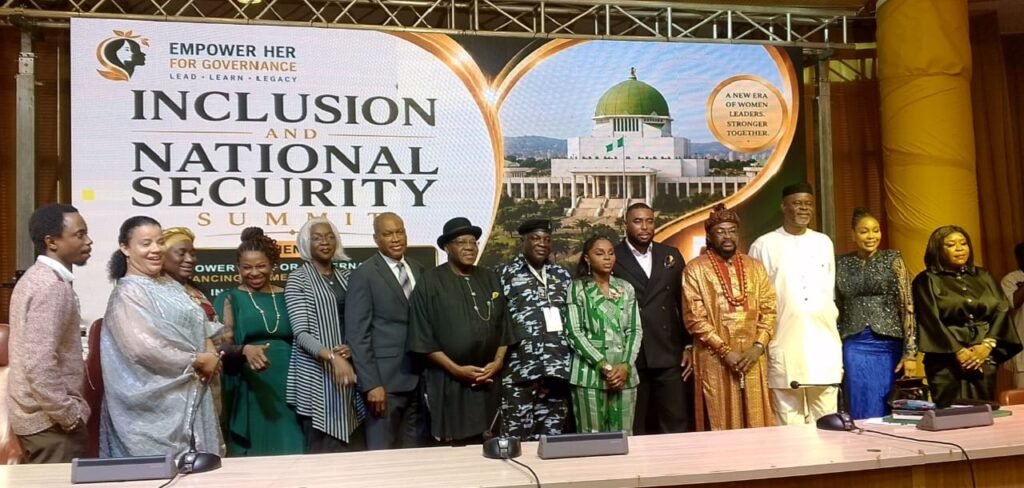
Women empowerment, inclusive governance and ethical leadership dominated discussions at the Empower Her for Governance, Inclusion and National Security Summit in Abuja.
The summit, with the theme: “Empower Her for Governance: Advancing Women’s Leadership for Inclusive Governance and Security,” brought together stakeholders from government, security agencies, civil society and community development organizations to examine the nexus between inclusive leadership, good governance and national security.
At the event in Abuja, the convener, Ebimoboere Alaibe Elezieanya, said national security was fundamentally about protecting people, their dignity, freedom and their right to live without fear.
Ebi described inclusion as a security imperative, stressing that Nigeria’s complex security challenges could not be effectively addressed by any single institution.
She also called for stronger collaboration among security agencies, government, communities and civil society, while advocating greater protection and meaningful participation of women in governance, peace-building and security processes.

Also speaking, the executive director of the African Centre for Leadership, Strategy and Development (Centre LSD), Dr. Otive Igbuzor, called for a fundamental transformation in the character of leadership, recruitment processes and the relationship between citizens and government.
Igbuzor stressed that leadership stability and inclusive governance were inseparable, noting that Africa needed ethical and visionary leaders capable of transforming its diversity into meaningful development.
READ ALSO: LEAP AFRICA HOSTS WOMEN EMPOWERMENT BOOT CAMP IN KENYA
Former managing director of the Niger Delta Development Commission, NDDC, Chief Timi Alaibe, advocated a governance system that guarantees citizens justice, opportunity and a sense of belonging.
He identified economic inclusion, political inclusion and community peace architecture as areas requiring urgent attention, warning that representation without authority amounted to mere symbolism.
He also insisted that women and other historically excluded groups must have meaningful influence in decision-making processes rather than merely being represented for appearances
Speakers at the summit maintained that national security should not be viewed solely through the lens of military and policing operations, but should also encompass justice, dignity, economic opportunities, social inclusion and citizens’ confidence in government.
The stakeholders therefore called for stronger partnerships among government institutions, security agencies, women’s organizations, civil society groups and local communities to promote inclusive leadership and responsive governance
They further urged policymakers to translate commitments to women’s empowerment and inclusion into concrete policies that would expand opportunities for women to participate meaningfully in political leadership, governance, peace-building and national security.
The summit ended with a renewed commitment by stakeholders to advance women’s leadership and inclusive governance, with participants stressing that Nigeria’s quest for lasting security and sustainable development would remain incomplete without the full participation and empowerment of women.

