
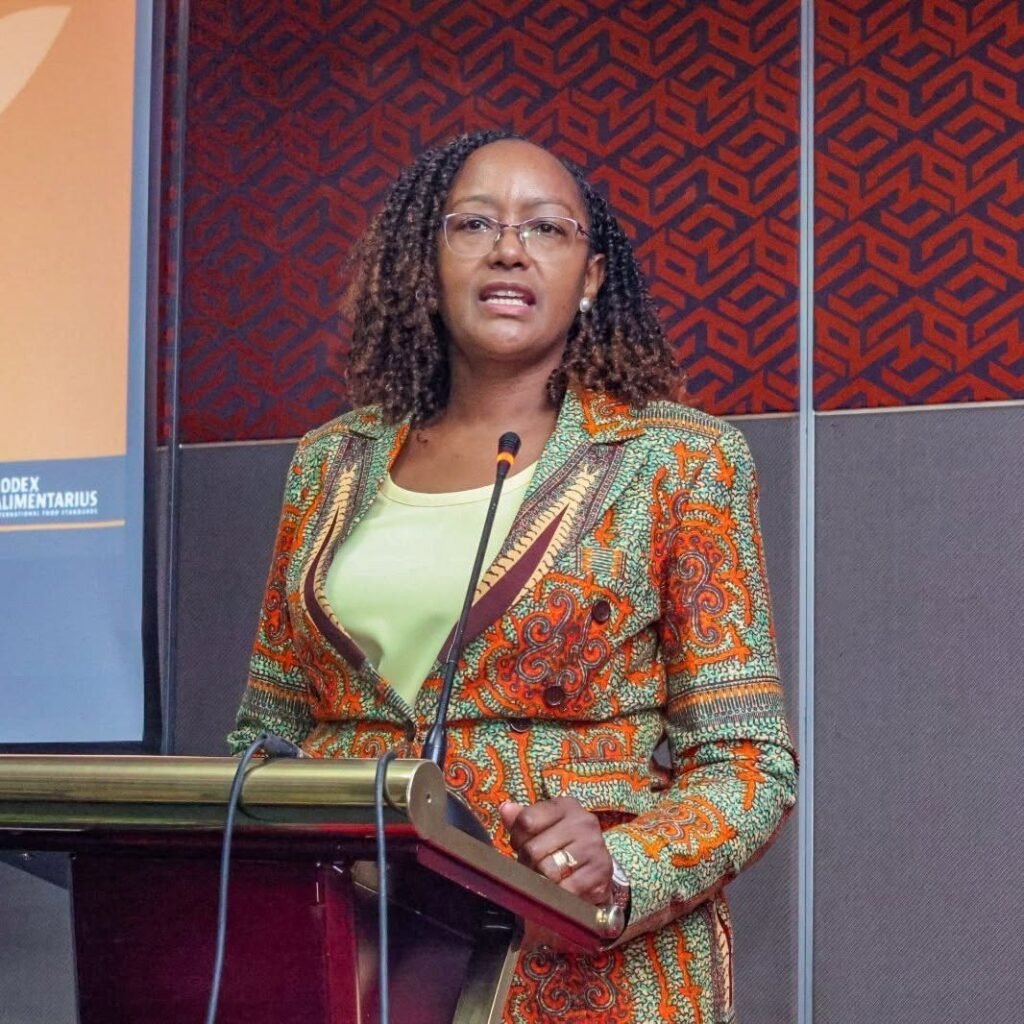
Esther Ngari, EBS, Managing Director and Council Secretary of the Kenya Bureau of Standards (KEBS) , has spent her career in that space, and she has spent her tenure at the top of Kenya’s national standards body proving that the space is not quiet at all. Under her leadership, KEBS has moved, with deliberate speed and unusual ambition, from a respected regulatory institution into one of the most strategically consequential public bodies on the African continent.
In the competitive world of standards development and conformity assessment, institutional leadership rarely attracts the kind of recognition it deserves. The work is complex, the mandate is sweeping, and the outcomes, safer products, more competitive exports, better-protected consumers, are felt everywhere except in the offices where the frameworks were designed.
A Career Built for This Moment
Ngari’s arrival at the KEBS Managing Director’s office in May 2023 was not the beginning of her relationship with quality systems and standards. It was the culmination of a career spanning more than two decades, built through progressively demanding roles in food safety, quality assurance, and institutional governance.
She spent nearly thirteen years at Kenya Meat Commission as Quality Assurance, Research and Development Manager, a position that gave her both the technical rigour of laboratory-based quality systems and the institutional complexity of managing a food processing organisation under competing commercial and regulatory pressures.
Before that, seven years at Del Monte Kenya as Quality Assurance Departmental Head embedded in her the global standards that the world’s most demanding food and beverage companies apply to every point in their production chain.
When she returned to KEBS as Director of Standards Development and Trade, a role she held for more than four years before her appointment as MD,she brought that private sector technical discipline into a public institution mandate. She shaped Kenya’s positioning in regional and international standardisation forums, drove the expansion of KEBS’s certification and conformity assessment functions, and built the institutional relationships that would later, under her MD mandate, translate into a wave of strategic MoUs with standards bodies across Africa and beyond.
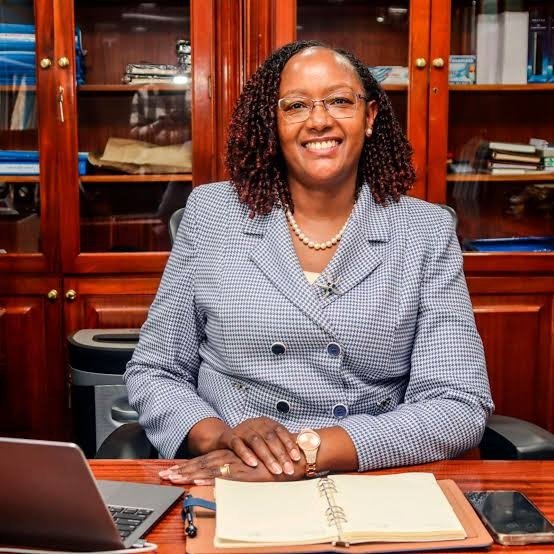
Six Months That Redrew the Continental Map
The pace and scope of KEBS’s institutional activity in the last six months of 2026 is striking even by the standards of a well-functioning national standards body. In the space of six months, KEBS has signed Memoranda of Understanding with the Zanzibar Bureau of Standards,formalised at State House Dar es Salaam in the presence of President Ruto and President Samia Suluhu Hassan,the Burundi Bureau of Standards, the South African Bureau of Standards, and the Malawi Bureau of Standards.
READ ALSO: AFDB DRIVES WOMEN’S ACCESS TO JUSTICE & FINANCING AT UN
Each MoU is a structured framework for technical cooperation in standardisation, metrology, and conformity assessment. Taken together, they represent the most concentrated period of bilateral standards diplomacy in KEBS’s recent history, and they position the institution as the connective tissue of a continental quality infrastructure that is still being built.
The partnerships extend beyond institutional handshakes. KEBS hosted the Standards Organisation of Nigeria for a strategic courtesy visit and laboratory tour. It received a Ugandan delegation for clean cooking standards benchmarking under the Energising Development programme. It engaged with the French Development Agency on honey standards and quality assurance for the Mau Forest supply chain.
It convened a Technical Working Group on tilapia welfare standards with Ethical Seafood Research Kenya. It hosted a regional training on lead-in-paint testing drawing participants from Uganda, Tanzania, Rwanda, Zimbabwe, Burundi, and the United States. And it signed an MoU with Dedan Kimathi University of Technology to anchor a research-to-standards pipeline that bridges academia and industry.
Standards as an Engine of National Competitiveness
What makes Ngari’s leadership at KEBS genuinely distinctive is her insistence on connecting standards to economic outcomes, not as a theoretical aspiration, but as a measurable institutional commitment. Her visit to the Tshwane Automotive Special Economic Zone in South Africa with Cabinet Secretary Lee Kinyanjui, studying a facility that produces one vehicle every three minutes using 500-plus robots and exports to 154 countries ,was a direct expression of this philosophy.
Her appearance as a panelist at the National Productivity and Performance Conference 2026, where she spoke on re-engineering productivity and performance management systems for objectivity and accountability, confirmed that KEBS under her watch is not a passive participant in Kenya’s public sector reform agenda.
It is a pilot institution for the Salaries and Remuneration Commission’s results-driven productivity contracting model, a distinction that reflects the credibility Ngari has built with the regulatory and governance architecture of the Kenyan state. KEBS’s recognition as 2nd Runner-Up in the State Corporation Productivity Award Category at the National Productivity and Performance Awards 2026 is the formal expression of that credibility.
Ngari’s engagement at the World Trade Organisation (WTO) Committee on Technical Barriers to Trade in Geneva, where she chaired a thematic session on conformity assessment and market surveillance risk methodologies, illustrates the full reach of her institutional leadership. She was not merely representing Kenya.
She was shaping the global conversation on how risk-based regulatory systems can protect consumers without creating unnecessary barriers to trade.
In a room that included regulators from the United States, Colombia, the European Union, and South Africa, Ngari brought Kenya’s perspective and Kenya’s expertise to one of the most technically demanding multilateral conversations in international trade governance.
Recognition, Mentorship, and the Leadership That Multiplies
In her own words, leadership at KEBS demands continuous learning, data-driven decision-making, and the discipline of listening to technical experts whose competence was built over careers.
She has said publicly that she does not make directional decisions without anchoring them in data, a principle that reflects both her scientific formation and her institutional responsibility.
She has also spoken candidly about the importance of mentoring younger professionals, particularly women and girls, who look at her trajectory and need to know that it is achievable, not because it is easy, but because it is the product of hard work, self-belief, and deliberate self-development.
It was in that spirit that the recognition at the 2nd InstinctWomen Conference and Awards in Nairobi carried particular weight. Ngari was honoured with the Public Sector CEO of the Year award and the overall Woman of the Year Excellence Award,the most distinguished individual recognition of the evening. KEBS as an institution received the Women in STEM and Digital Inclusion Award and the Best Public Sector Gender Mainstreaming Initiative Award.

