
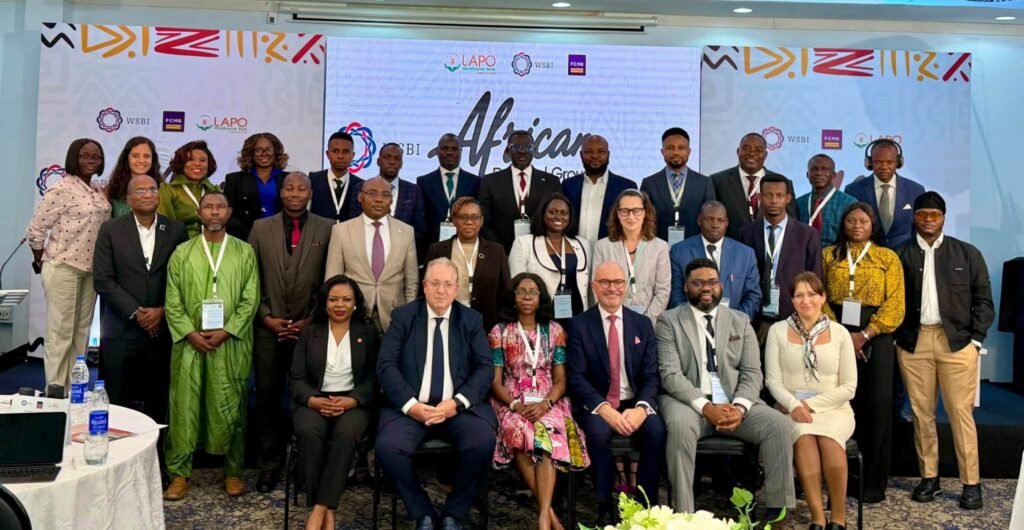
LAPO Microfinance Bank and the World Savings and Retail Banking Institute (WSBI) have urged financial institutions across Africa to prioritize climate finance that reaches micro, small and medium enterprises (MSMEs), women and smallholder farmers.
The call was made at the Africa Inclusive Climate Finance Conference 2026, held in Lagos under the theme “Gender-Smart Finance for Climate-Smart Agriculture: Building Inclusive Rural Economies.” The gathering brought together banks, regulators, development finance institutions, technology firms and private-sector players to examine the links between climate resilience, financial inclusion and women’s economic empowerment.
Cynthia Ikponmwosa, Managing Director and Chief Executive Officer of LAPO Microfinance Bank, said the climate challenge is fundamentally a financing challenge for communities that depend on agriculture and informal economic activity.
“Climate resilience cannot be separated from financial inclusion. If women farmers, rural households and small businesses cannot access the capital they need to adapt, then climate finance will remain disconnected from the realities of the people it is meant to serve,” she said. She called on financial institutions to move beyond conventional lending models and design products that reflect the income patterns and vulnerabilities of underserved communities.
Peter Simon of WSBI highlighted the organisation’s more than 100-year history in advancing inclusive financial services and stressed the role of savings and retail banks in channeling climate finance to the grassroots.
“The challenge before Africa is not simply to mobilise more capital, but to ensure that capital reaches the people and businesses that need it most. Inclusive finance must become part of the continent’s climate resilience infrastructure,” Simon said.
READ ALSO: MTN FOUNDATION, BOI EMPOWER WOMEN AT Y’ELLOPRENEUR
From the technology perspective, Chidozie Arinze, Senior Director of Government Affairs for Western and Central Africa at Visa, described digital finance as a key enabler of broader access. He noted that digital payments can help institutions reach excluded communities more efficiently while improving transparency and formal economic participation.
Angela Omeiza, ESG Board Chairperson of LAPO Microfinance Bank, argued that gender-smart finance must go beyond products simply targeted at women. It requires a deeper understanding of the risks women face and the economic activities through which they earn income, particularly in agriculture and informal markets.
“Gender-smart finance is not simply about creating products for women. It is about understanding the risks women face, designing finance around those realities and ensuring that capital translates into resilience, productivity and sustainable livelihoods,” Omeiza said.
Discussions focused on converting climate risk into bankable opportunities. Participants examined how climate-risk information can be used to design products that help communities prepare for and recover from climate shocks. Al-Amine Nejjar, WSBI Vice President and Africa Regional President, and Kola Masha, Managing Director of Babban Gona, contributed perspectives on the role of African savings banks and the practical financing needs of smallholder farmers.
A high-level panel titled “When Capital Meets Climate: Rethinking What Impact Really Means” challenged stakeholders to look beyond the volume of capital deployed and focus on measurable outcomes for livelihoods and economic resilience. The panel included Dorcas Thorpe of LAPO, Oluwaseun Sofuyi of the Central Bank of Nigeria, and Ayodele Olojede of the Development Bank of Nigeria.

