
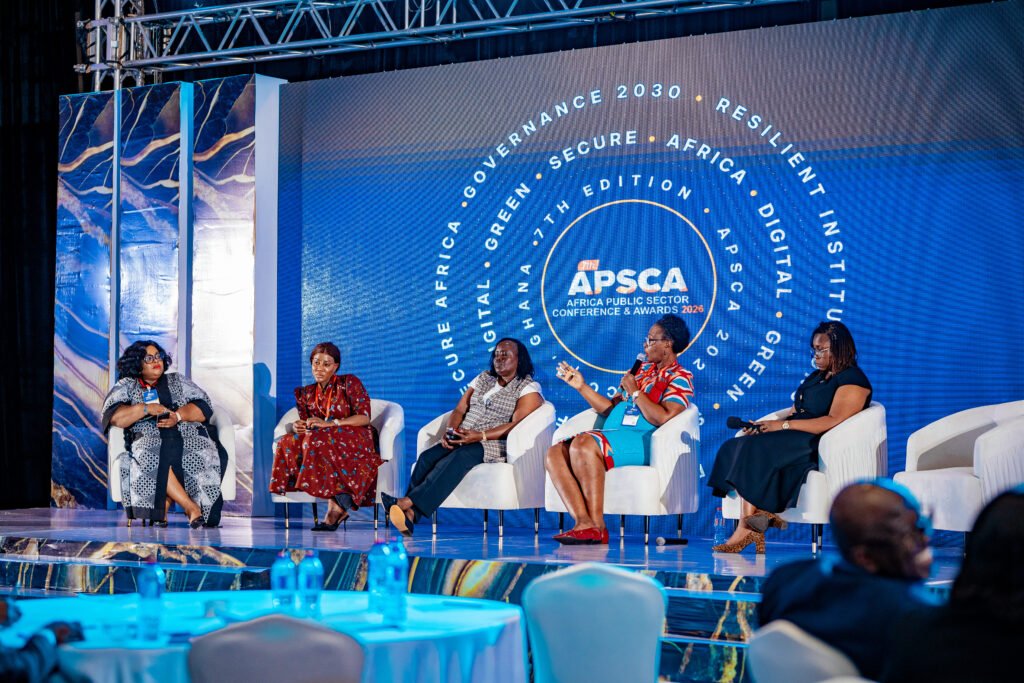
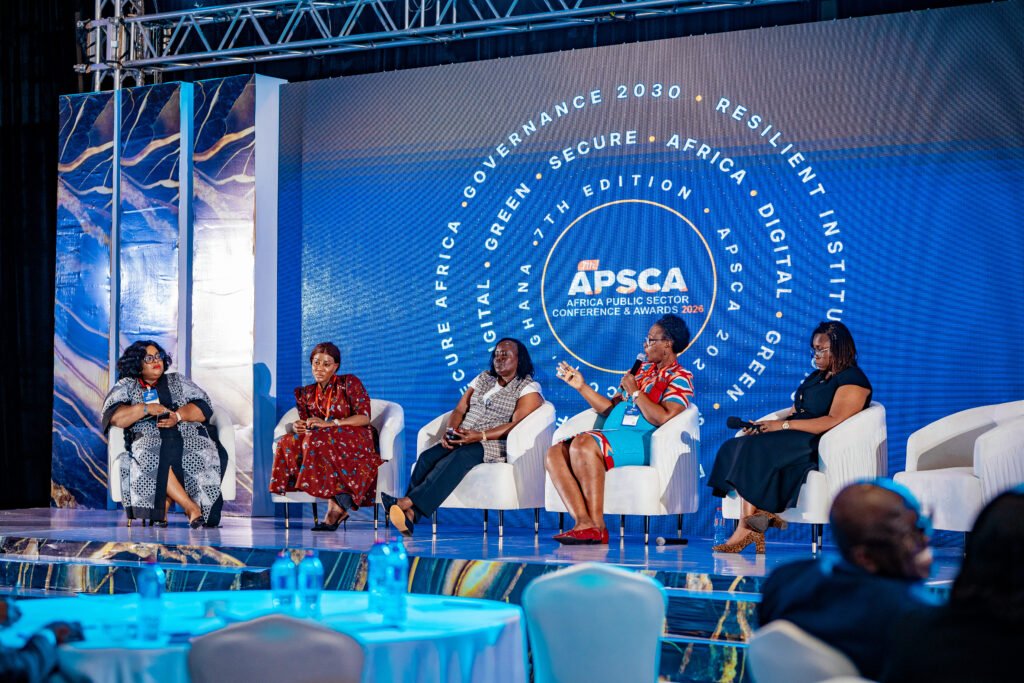
Women in senior public sector roles must combine technical competence, personal confidence and deliberate institutional reforms if Africa is to build a stronger pipeline of female leaders, panelists said at the Women in Leadership and Governance Forum during the 7th Africa Public Sector Conference and Awards (APSCA) 2026 in Accra.
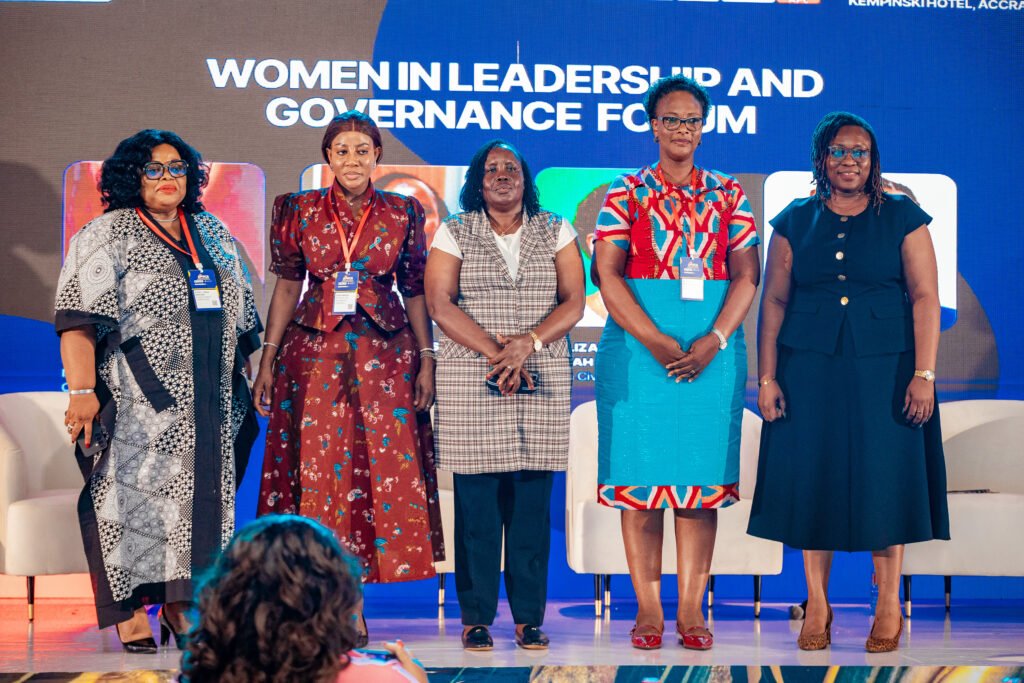
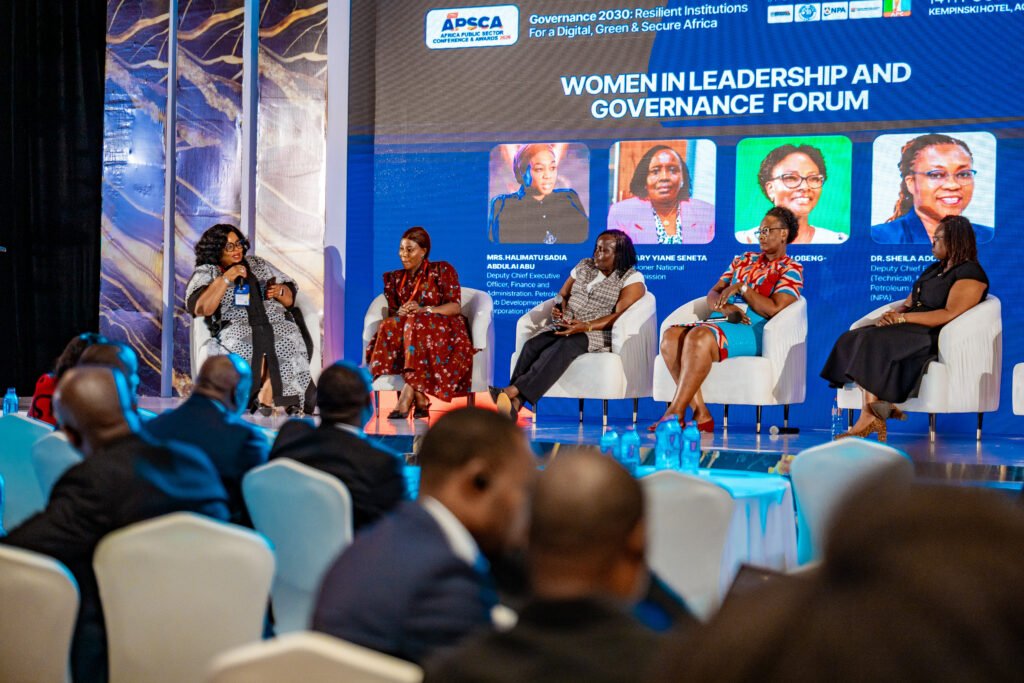
The session, held under the conference theme “Governance 2030: Resilient Institutions for a Digital, Green & Secure Africa,” brought together senior women like Mrs. Halimatu Sadia Abdulaibabu, Deputy Chief Executive Officer, Finance and Administration, Petroleum Hub Development Corporation (PHDC), Hon. Mary Yiane Seneta, Commissioner, National Land Commission, Dr. Elizabeth Obeng-Yeboah, Director: RTDD / RCU, Ghana Civil Service and Dr. Sheila Addo, Deputy Chief Executive (Technical), National Petroleum Authority (NPA) to discuss practical barriers and solutions.
Preparation as the Antidote to Bias
Mrs. Halimatu Sadia Abdulaibabu, Deputy Chief Executive Officer for Finance and Administration at the Petroleum Hub Development Corporation, spoke about navigating technical and investor spaces often dominated by men.
“There are times when you walk into a room where investor decisions are being made and they tend to overlook the person in charge of finance,” she said. “You overcome that by preparation. You come with your numbers. They cannot debunk what they do not know. Once you present the figures clearly and prove your competence in managing public funds, the room adjusts.”
She added that competence, not competition, is the foundation of recognition in highly technical project finance environments.
Closing the Gap Between Policy and Practice on Land Rights
Hon. Mary Yiane Seneta, Commissioner at Kenya’s National Land Commission, highlighted persistent barriers to women’s land rights despite progressive laws.“Customary practices and traditional beliefs continue to undermine women’s rights and economic empowerment,” she said.
“Women often lack access to information because of their responsibilities on farms and in the home. Weak enforcement of laws remains a major challenge.”She pointed to Kenya’s constitutional protections, including Article 60 requiring the elimination of gender discrimination in land-related laws and customs, as well as the Matrimonial Property Act and Community Land Act.
“A strong legal framework goes a long way, but it must be matched by deliberate implementation if women are to influence actual decisions on land administration rather than being heard only during consultations.”
Intentional Systems in the Civil Service
Dr. Elizabeth Obeng-Yeboah of the Ghana Civil Service addressed workplace systems that can unintentionally limit women’s advancement, including access to high-profile assignments, training and postings.
She noted that while policies are increasingly gender-responsive, practical barriers remain, particularly around international training and postings for married women. The service has introduced measures that take family circumstances into account when making posting decisions.
“We are intentional about our human resource practices,” she said. “Policies alone are not enough. Women must also take the opportunities when they are offered.”
Confidence as a Critical Leadership Skill
Dr. Sheila Addo, Deputy Chief Executive (Technical) at the National Petroleum Authority, focused on the energy sector and the role of self-belief.“Women often have the competence but lack the confidence to put themselves forward,” she said.
“A male colleague may present himself as fully ready even when he is not. A female colleague who is 80 or 90 per cent ready may hold back. Building confidence, speaking up, and remaining consistent even when others try to take credit is essential for breaking barriers.”
She stressed that institutions must create space for women not only to hold titles but to influence capital decisions, investor discussions and strategic assignments.

