

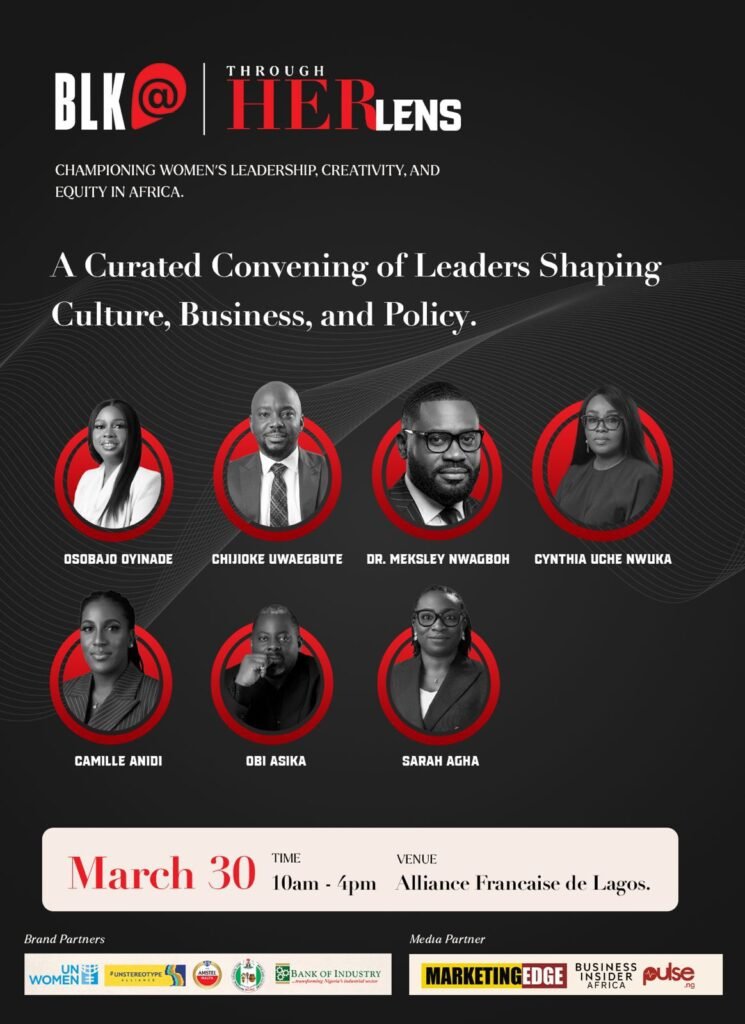
Black At, the global platform championing access and inclusion for Black creatives and executives, on Sunday launched “Through Her Lens” in Lagos — a wide-ranging initiative designed to confront and reframe gender inequality within the creative economy, beginning in one of Africa’s most dynamic cultural capitals.
The initiative will travel through Johannesburg, São Paulo, London, Cannes, and New York before producing a landmark white paper on gender equity in the creative sector
The Lagos edition marks the opening salvo of a global series that will move through Johannesburg, São Paulo, London, Cannes, and New York during the United Nations General Assembly in 2026. Insights gathered across all six cities will feed into a comprehensive white paper, which Black At says will offer actionable recommendations for brands, institutions, and policymakers, influence investment in the creative economy, and map concrete pathways for women’s advancement across the industry.
Osarimen Ukhurebor, Chief Executive Officer of Black At, was direct about the initiative’s ambition. “This is about more than conversation,” she said. “It’s about building a data-driven foundation that influences real change across the global creative ecosystem.” The platform’s choice of Lagos as the launch city was deliberate — a recognition, Ukhurebor said, of the city’s standing as a creative and cultural hub whose influence on the global imagination is no longer peripheral.
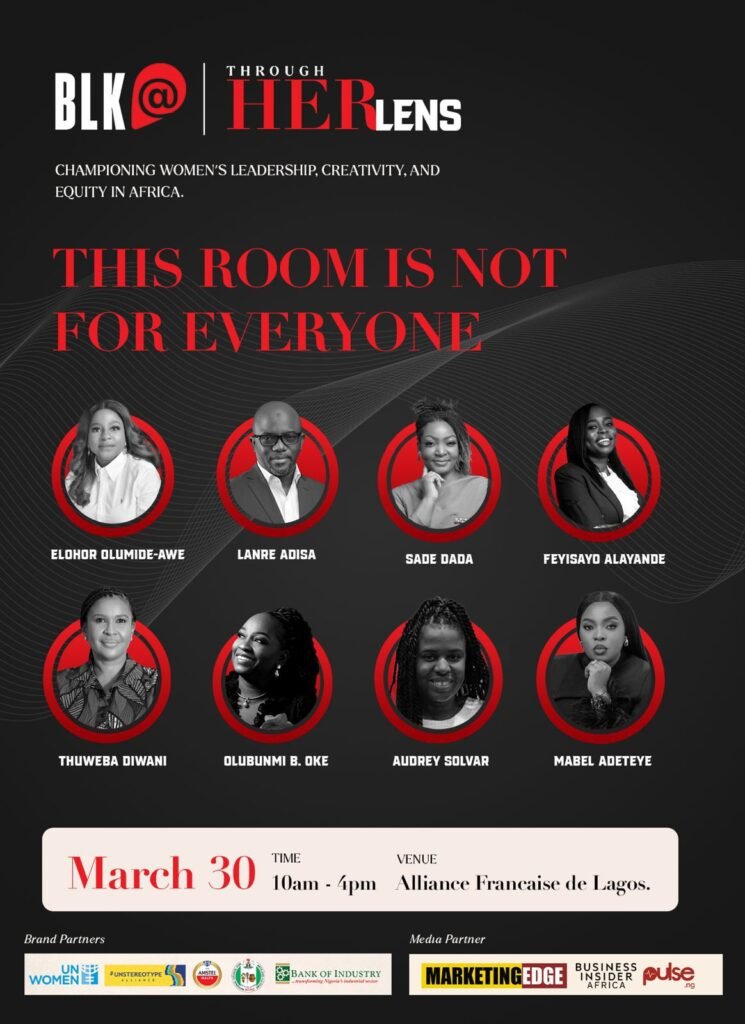
Among the featured voices for the Lagos edition is Mabel Adeteye, Head of Brands and Marketing Communications at Wema Bank, whose remarks captured the broader shift the initiative seeks to amplify. “Women are no longer just entering creative leadership — we are reframing what leadership looks like,” she said.
“We are moving creativity beyond attention toward connection, impact, and legacy.” Her perspective, shared by a growing number of senior creative professionals, points to a generation of women who are not simply claiming space in existing structures but actively reconstructing what those structures reward and recognise.
The initiative also tackles the accelerating influence of artificial intelligence on the creative industries and pushes back against the assumption that technology is the primary engine of creative progress. “AI is not the future of creativity it is a tool within it,” Adeteye said. “You cannot automate insight, cultural sensitivity, or meaningful storytelling.
” It is a position that sits at the heart of Through Her Lens: that the qualities which define enduring creative work cultural intelligence, purposeful narrative, human connection remain stubbornly, valuably human.
ALSO READ: CASCADOR APPOINTS OYIN SOLEBO AS CHIEF OPERATING OFFICER
A further strand of the initiative addresses the global positioning of African brands and creative professionals. Black At is calling for a shift away from fragmented, episodic storytelling toward consistent, value-driven narratives that present Africa’s creative strength not as a regional curiosity but as a mainstream global force.
Through Her Lens is organised around four intersecting themes: gender equality in the creative sector; access to leadership and economic opportunities; recognition of creative excellence and impact; and the relationship between culture, innovation, and inclusion. Together, they form a framework that Black At says reflects the full complexity of what women in the creative economy are navigating and what the industry must change to retain and elevate them.
The white paper, expected to be released following the New York leg of the tour, is intended to serve as both an evidence base and a call to action for anyone with influence over how the creative economy is structured, funded, and led.

