
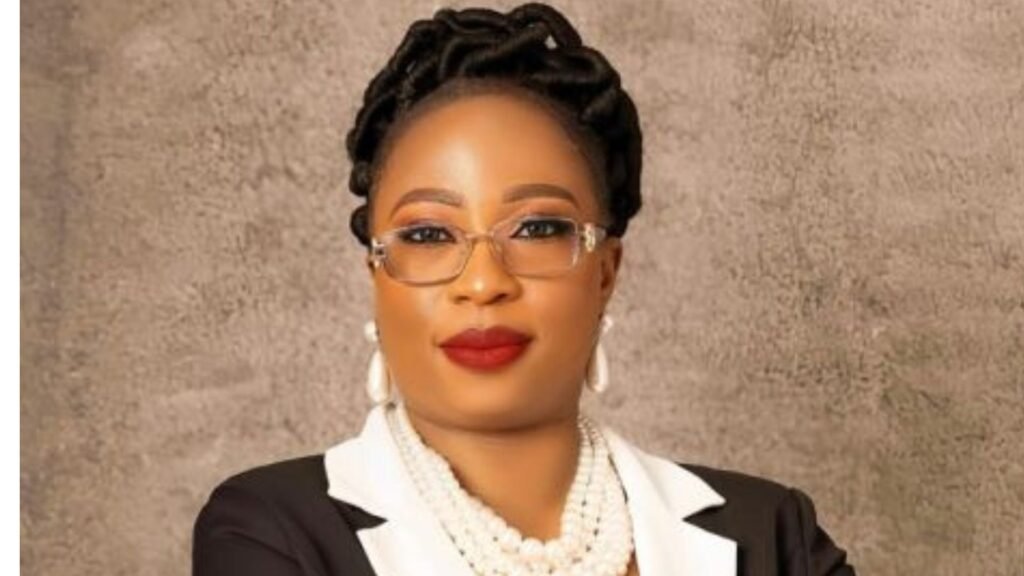
Dr. Folasade Femi-Lawal, Country Manager and Area Business Head, West Africa at Mastercard, has called for a deeper rethink of the role of women in leadership, arguing that the real impact goes far beyond representation to fundamentally reshaping how economic systems function.
Speaking on the evolving dynamics of leadership and inclusion, Femi-Lawal noted that conversations around women’s participation often stop at visibility,ensuring women have a seat at the table. However, she emphasized that the more critical question is what changes within institutions and economies when women actively participate in decision-making processes.
According to her, women in leadership positions influence how opportunities are created, how capital is allocated, and how access to economic participation is structured. This, she explained, is where meaningful transformation occurs, as leadership is not only about presence but about shaping the frameworks that determine who benefits from economic outcomes.
Femi-Lawal highlighted that when leadership reflects broader perspectives, systems become more inclusive, enabling wider participation across different segments of society. This, in turn, allows more individuals to contribute to and benefit from economic growth, rather than concentrating opportunities within a limited group.
ALSO READ: NNPC RETAIL HOSTS SHE-FIX 2.0 TO DRIVE FEMALE EMPOWERMENT
She warned that narrow systems, even when they show signs of growth, often fail to deliver inclusive outcomes due to restricted participation. Such limitations, she said, can undermine long-term development and sustainability, as economic progress becomes uneven and exclusionary.
The Mastercard executive further stressed that sustainable development should not be measured solely by growth indicators, but by how inclusive that growth is and how widely participation is distributed across the economy.
“The impact of women’s leadership is not symbolic,it is structural,” she stated, adding that it expands access, improves opportunity distribution, and strengthens the foundations for long-term, inclusive growth.
Femi-Lawal concluded by challenging institutions and leaders to critically assess their systems, urging them to identify areas that enable broader participation and those that may still unintentionally restrict access, noting that economies risk losing significant potential when inclusion is not fully realized.

