
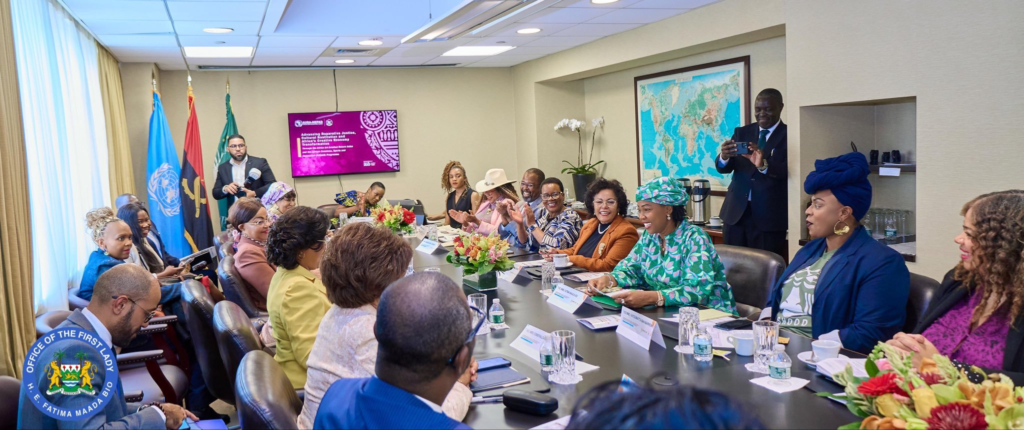
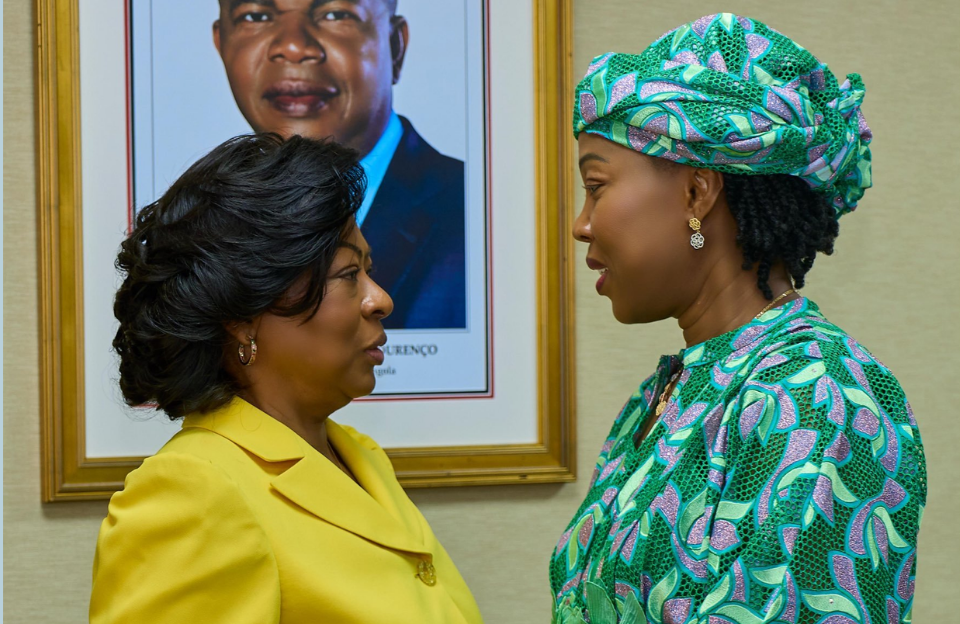
During the 81st United Nations General Assembly in New York, Sierra Leone’s First Lady, H.E. Fatima Maada Bio, joined her Angolan counterpart, H.E. Ana Dias Lourenço, and other distinguished African leaders for a high-level dialogue focused on advancing reparative justice, cultural restitution and the transformation of Africa’s creative economy.
In a statement shared on her official X account, the First Lady described the engagement as far more than a reflection on historical injustices. “This was more than a conversation about the past. It was a conversation about Africa’s future,” she wrote.
Mrs. Bio emphasised that Africa’s cultural heritage embodies the story of its people, identities, civilisations and global contributions. She noted that for generations, precious artefacts and cultural treasures were removed from the continent, while much of Africa’s creative wealth and intellectual contributions have not always translated into tangible opportunities for its citizens.
“Cultural restitution is therefore not simply about the return of objects. It is about restoring history, dignity, identity and ownership, while creating pathways for future generations to learn from and build upon their heritage,” the First Lady stated.
She equally stressed the urgent need to transform Africa’s creative economy. Highlighting the extraordinary talent of African artists, filmmakers, musicians, writers, designers, performers, artisans and young innovators, Mrs. Bio argued that with the right investment, infrastructure, intellectual-property protection, markets and opportunities, the continent’s creativity can become a stronger driver of jobs, entrepreneurship and sustainable economic growth.
READ ALSO: STANDARD CHARTERED WOMEN IN TECH INCUBATOR GRADUATES COHORT 7 FOUNDERS
The First Lady pointed to the work of AUDA-NEPAD’s African Art and Artefact Return Initiative (A3RI) and the Africa Creatives, Sports and Recreation Programme (ACSAR) as important steps toward converting recognition into practical action.
As Africa moves through the 2026–2036 Decade of Reparations, Restitution and Justice, she called for the continent to continue shaping the agenda on its own terms — ensuring heritage is protected, stories are told by Africans themselves, cultural assets are properly valued, and young people can build prosperous futures from the richness of their identity.
“I was honoured to stand alongside fellow First Ladies in support of this important continental journey,” Mrs. Bio concluded. “Our heritage is our identity. Our creativity is our strength. Our future is ours to shape.”

