
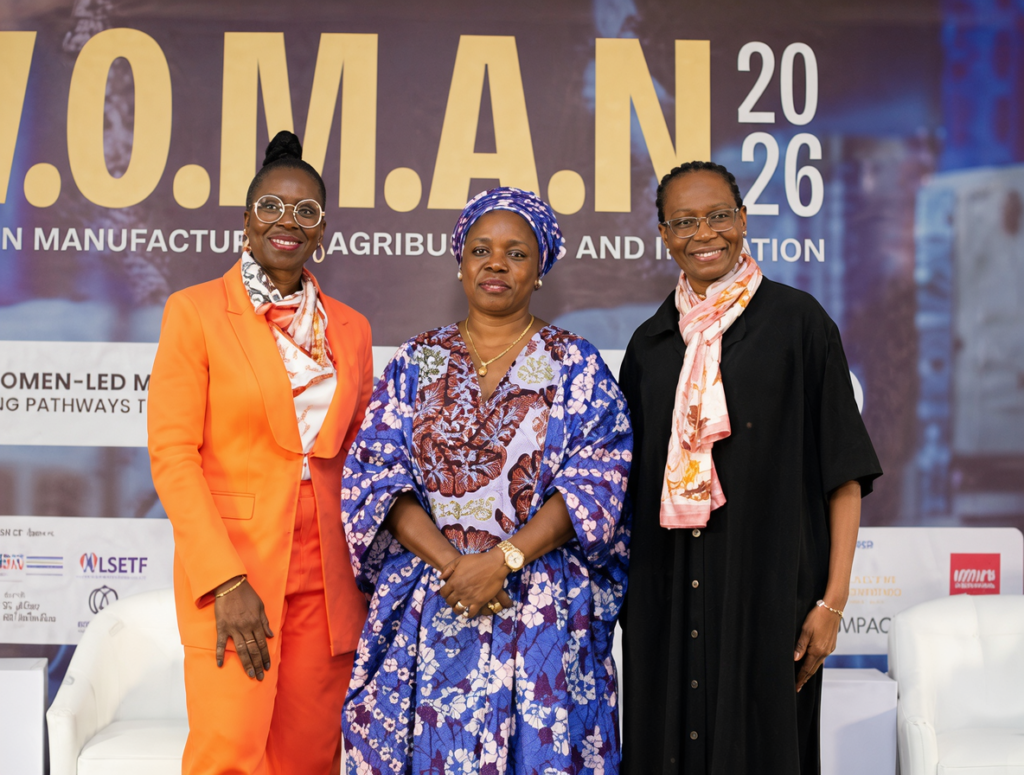
Alitheia Capital and some 300 women-led businesses in manufacturing, agribusiness and nutrition have called for financing solutions built around their needs. The firm warned that viable enterprises are still locked out of formal capital, even when they have shown they are ready to receive investment.
The appeal was made in Lagos at the third edition of the W.O.M.A.N. conference, which Alitheia Capital organised. Entrepreneurs, investors, policymakers and development partners used the event to examine the obstacles that women-led businesses face in accessing capital, energy, technology and markets.
Held over two days, the conference ran under the theme “Scaling Women-Led Manufacturing, Agribusiness & Nutrition MSMEs: Providing Pathways to Capital, Energy, AI and Markets for Business Resilience.” Its aim was to help women-led enterprises move beyond survival and towards sustainable growth.
Speaking on behalf of Lagos State Governor Babajide Sanwo-Olu, the Commissioner for Agriculture and Food Systems, Abisola Olusanya, said women-led businesses still struggle to obtain suitable finance and growth capital.
“Many viable businesses struggle to move from the stage of survival to the stage of sustainable scale. Closing that gap must therefore be a collective responsibility. The government has a role.
Financial institutions have a role. Private equity and venture capital have a role. Development partners have a role. And the entrepreneurs themselves must continue to invest in good governance, capacity, transparency and the systems required to build sustainable enterprises,” Olusanya said.
Participants also stressed that formalisation, financial discipline and sound corporate governance are essential for women-led businesses that want to attract investors.
In her keynote, titled “From Survival to Scale: Building Investment-Ready Women-Led Enterprises in Nigeria’s Real Economy,” Ifeyinwa Ighodalo argued that financial discipline can decide whether a business gets access to capital. Ighodalo is Co-Founder of WIMBIZ and Founder and CEO of DO.II Designs Limited.
“Financial discipline creates business legibility; business legibility creates credibility, and credibility creates access to capital and opportunities for growth,” Ighodalo said.
Sessions covered regulatory and infrastructure constraints, funding options for small and growing businesses, and how green manufacturing can lower costs and improve operational resilience.
Alitheia Capital said its investment-readiness programme gave entrepreneurs practical grounding in financial statements, unit economics, governance and capital structuring. A separate green investment session treated energy efficiency both as a way to cut costs and as an asset worth investing in.
Alitheia Capital Co-Founder Jumoke Akinwunmi said the event made clear that the real problem lies not with the businesses but with an ecosystem that has yet to offer them fitting financing.
“What today showed us is that the theory is not the problem. The businesses are ready. The question is whether the ecosystem around them is ready to respond,” Akinwunmi said.
Day two turned to artificial intelligence. An AI adoption programme, delivered with Google Hustle Academy, showed entrepreneurs how to apply AI in their operations and marketing.
READ ALSO: FIRST LADY FATIMA BIO CHAMPIONS AFRICA’S CALL FOR REPARATIVE JUSTICE AND CREATIVE ECONOMY GROWTH
Funmilayo Ogunsanya, Co-Founder of Nature Sense, said the programme would strengthen her business. “Honestly, it was so impactful. I learnt a lot that will help me take Nature Sense to the next level. I am more convinced than ever that we are ready for what comes next,” Ogunsanya said.
Tokunboh Ishmael, Managing Partner and Co-Founder of Alitheia Capital, said the turnout of more than 300 screened, revenue-generating businesses proved that many women-led enterprises have already cleared the bar for formal investment.
“Each was assessed against a revenue threshold, formalisation status and demonstrated growth potential, and the majority of you have never accessed formal capital. That is not a problem of ambition. It is a problem of design,” Ishmael said.
He added that the firm’s own track record makes the commercial case for financing structures designed specifically for women-led businesses.
“After more than a decade of investing across sub-Saharan Africa, with over $250 million in assets under management, our portfolio keeps proving the same thing: when you design capital for women-led businesses, the returns follow. When women-led businesses scale, local economies scale. That is not a social argument. It is a financial one,” Ishmael said.
Over the next 12 months, Alitheia Capital will track the participating businesses, looking at their access to capital, revenue growth and use of the skills gained at the conference.
W.O.M.A.N., short for Women in Manufacturing, Agribusiness and Nutrition, is Alitheia Capital’s yearly programme for high-potential women-led businesses. It pairs a two-day conference with a 12-month follow-up.

