
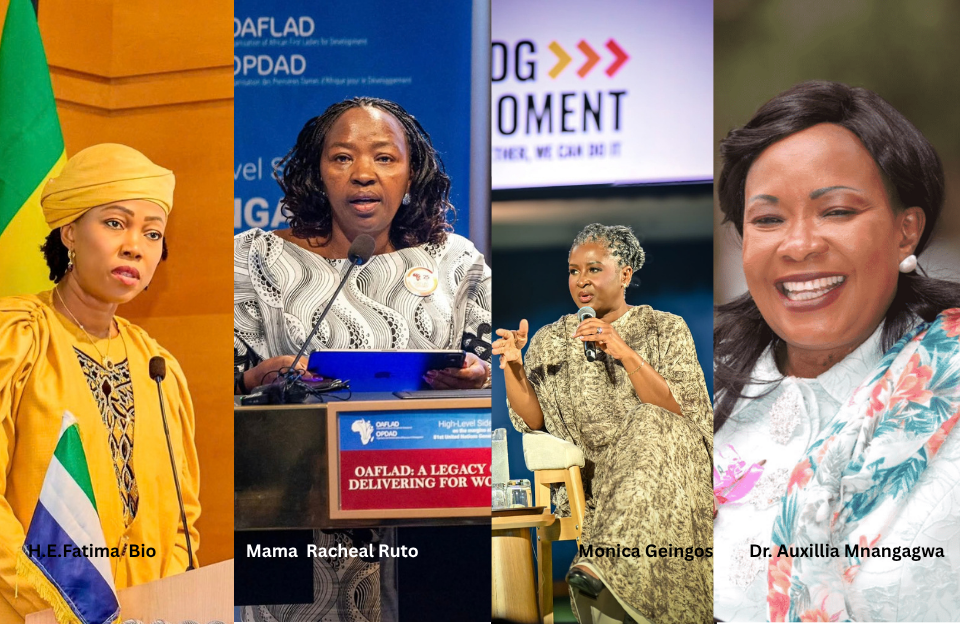
As world leaders gather in New York for the 81st Session of the United Nations General Assembly (UNGA 81), First Ladies from across Africa are using the high-level week to advance conversations around women’s rights, child protection, education, nutrition, digital safety, economic empowerment and sustainable development.
The 2026 UNGA is being held under the theme “Restoring Trust, Managing Transformation: A United Nations That Delivers for All.” The high-level week has also provided a platform for African First Spouses to participate in side events, bilateral engagements and advocacy initiatives beyond the formal General Debate.
Among the African first spouses drawing attention during the New York engagements are Dr. Fatima Maada Bio of Sierra Leone, Rachel Ruto of Kenya, Dr. Auxillia Mnangagwa of Zimbabwe and Monica Geingos of Namibia
Fatima Maada Bio: Taking the Fight Against Child Marriage to the Global Stage
For Sierra Leone’s First Lady, Dr. Fatima Maada Bio, UNGA week has been an extension of a long-running advocacy campaign focused on women, girls and children.
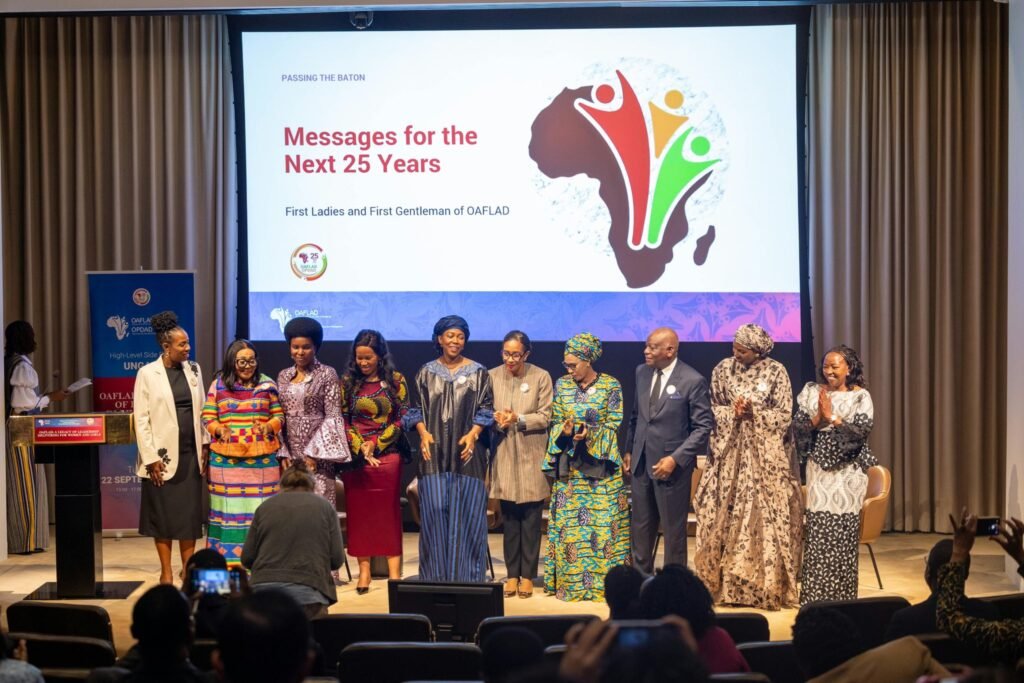
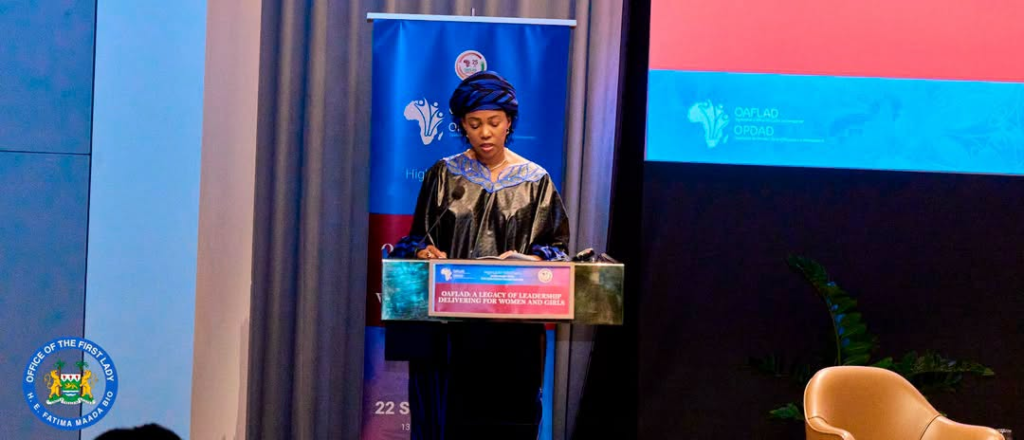
As President of the Organization of African First Ladies for Development (OAFLAD), Bio participated in the organisation’s high-level UNGA 81 convening in New York, which brought together African First Ladies and the First Gentleman of Namibia under the theme “OAFLAD: A Legacy of Leadership — Delivering for Women and Girls.”
Her engagements also included discussions with Plan International on the rights, education and wellbeing of girls. Plan International’s leadership confirmed meeting Bio at the UN General Assembly to discuss what is required to end child marriage.
Bio also used her international engagements to connect Sierra Leone’s priorities with the global academic community. At the Global Catalyst Summit, she said Harvard University and MIT had honoured her for leadership and service to Africa.
“This recognition is not mine alone. I accept it on behalf of the women, girls, young people, and communities across Africa whose courage, resilience, and hopes continue to inspire my work.”
She further emphasised the importance of stronger Africa-global academic partnerships, particularly around women’s health, education and opportunities.
“I believe that meaningful collaboration with Africa is essential to shaping a healthier, more equitable global future.”
Bio also addressed audiences at Harvard Medical School and MIT, saying the opportunity was about ensuring that African experiences and solutions are represented in global conversations.
“Africa must not only be part of the global conversation; we must help shape it.”
Her UNGA-related engagements have also included supporting President Julius Maada Bio at the launch of the countdown to the West Africa Integration and Investment Summit (WAIIS) 2026, scheduled to take place in Freetown.
At an Africell UNGA side event, she highlighted the company’s partnership with her Hands Off Our Girls campaign, which focuses on protecting and empowering girls in Sierra Leone.
“That kind of partnership goes beyond business. It is about shared values, commitment and a genuine belief in the future of our young people.”
The First Lady was also recognised as an Iconic Woman of the Year at the UNGA81 Powerlist Honours in New York.
To receive this recognition during the United Nations General Assembly is a privilege I accept with immense gratitude—not only as First Lady of Sierra Leone, but as a woman committed to using her voice and platform to advance the lives of women and girls, both in Sierra Leone and across Africa.
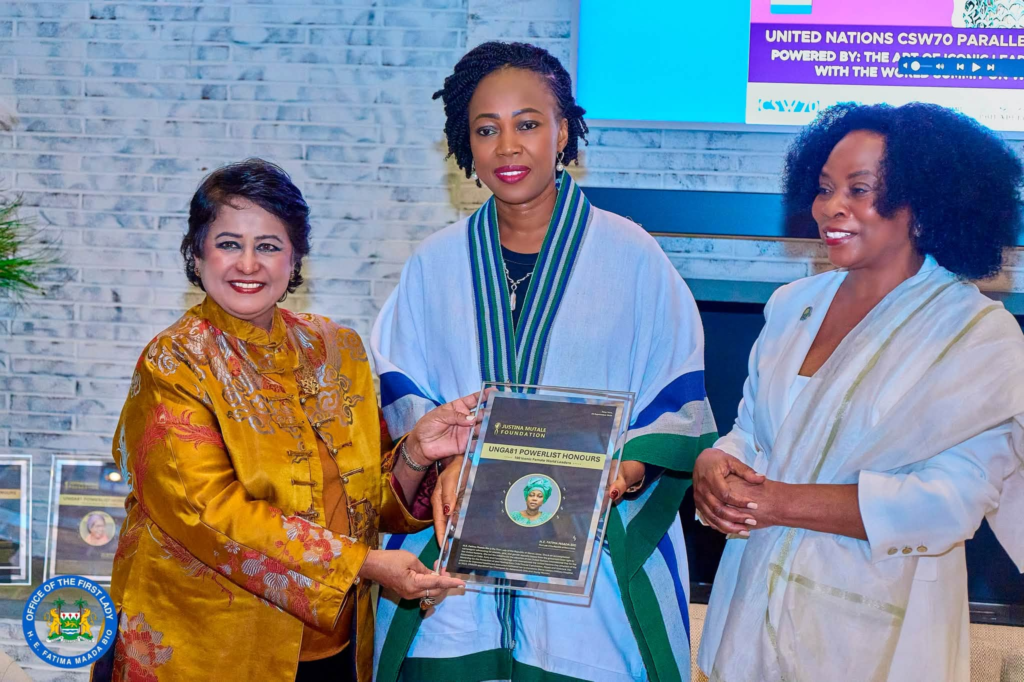
The emphasis reflects the broader work of the Office of the First Lady, whose stated priorities include gender equality, protection of women and girls and inclusive social development.
Rachel Ruto: Connecting Nutrition, Education and Child Protection
Kenya’s First Lady, Rachel Ruto, has used her UNGA 81 engagements to highlight issues affecting children’s welfare, including school nutrition and online safety.
At the Invisible Architecture Forum at UN Headquarters in New York, she called for stronger safeguards to protect children in digital environments.
“Protecting children in the digital age is a shared responsibility.”
She argued that governments, technology companies, parents, teachers and international partners need to work together to ensure children benefit from technology without sacrificing their safety, dignity and privacy.
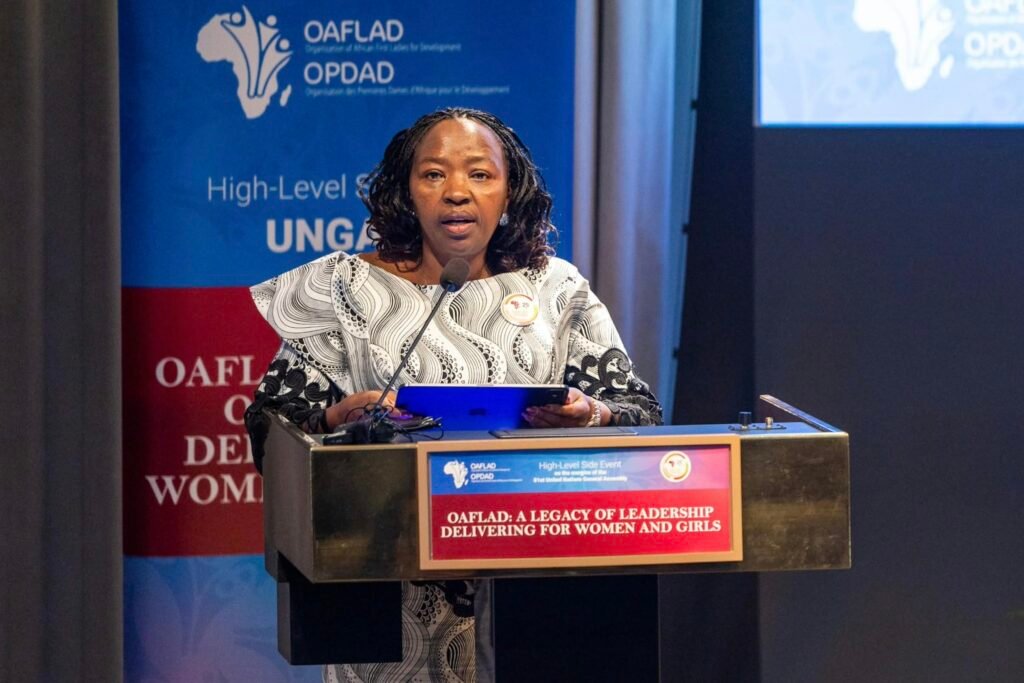
Rachel Ruto also brought Kenya’s school meals programme to the attention of global development partners during a meeting with the World Food Programme (WFP) and The Rockefeller Foundation in New York.
She called for stronger partnerships to help Kenya expand school meals to 10 million learners by 2030. According to Kenya’s reported programme figures, coverage has grown from about 1.8 million learners in 2023 to approximately 2.6 million.
“Feeding a child is not an act of charity; it is an investment in that child’s potential and in our country’s future.”
She also linked school feeding to agriculture, climate resilience and local livelihoods, pointing to initiatives such as school gardens and the National School Milk Programme.
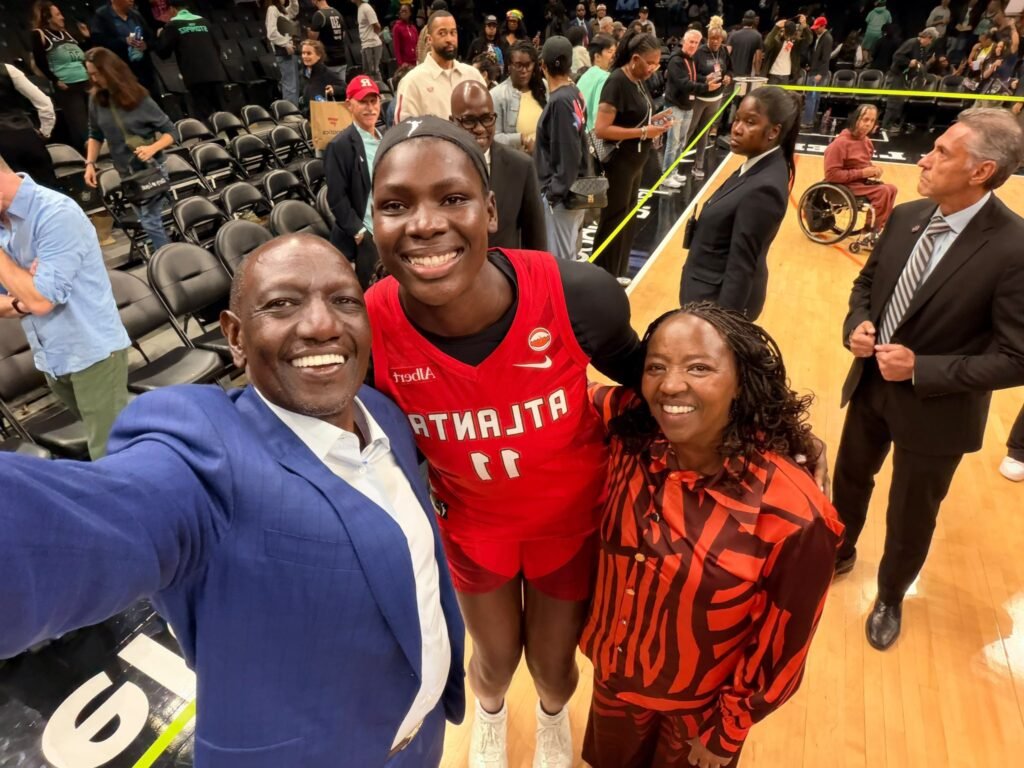
“A school meal is never only a meal. It is predictable demand for the farmer who grows it, and an investment in the resilience of the community that produces it.”
The First Lady further framed the programme as a broader development intervention:
“A school meal can nourish a child, sustain a farmer, protect a forest and strengthen a nation.”
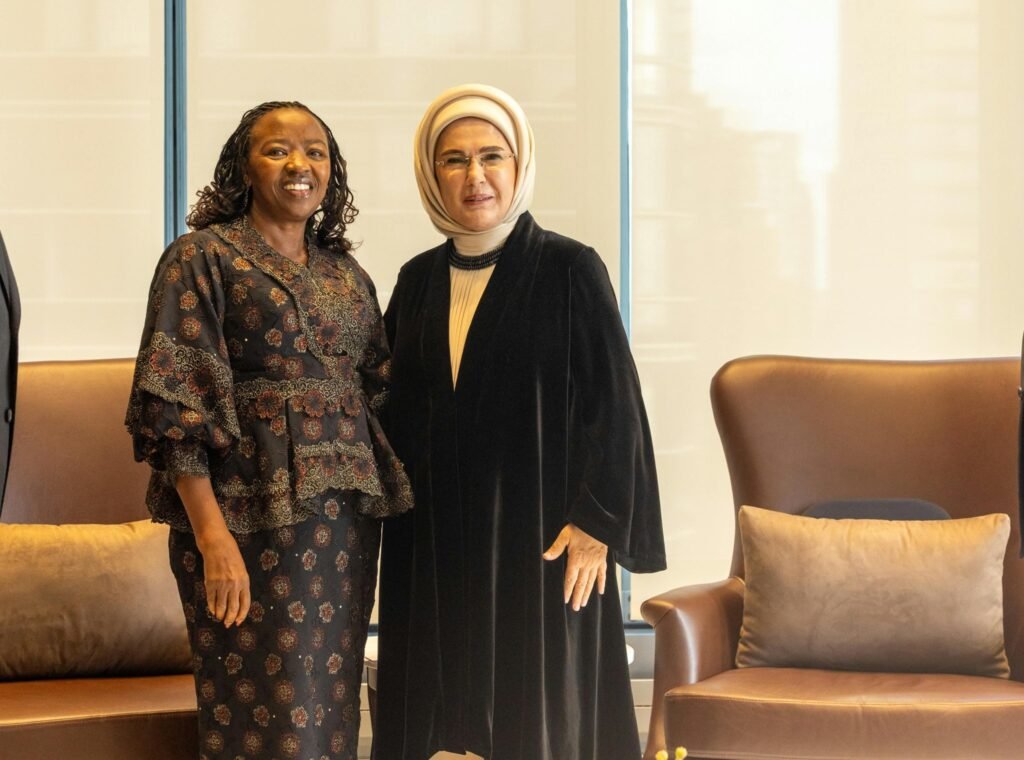
Rachel Ruto was also among the African First Ladies participating in the OAFLAD high-level UNGA 81 convening, alongside Fatima Maada Bio and other continental leaders.
Auxillia Mnangagwa: Opening Global Platforms for Zimbabwean Women and Creatives
Zimbabwe’s First Lady, Dr. Auxillia Mnangagwa, participated in the 14th Annual Official First Ladies Luncheon, hosted by Fashion 4 Development on the sidelines of UNGA 81 in New York.
Her participation created a platform for discussions around Zimbabwe’s creative industries, women and youth empowerment, fashion, tourism and international market access.
According to The Herald, Fashion 4 Development expressed interest in working with Mnangagwa and Zimbabwe’s tourism authorities to create international opportunities for Zimbabwean designers and fashion students, including potential access to fashion weeks and international runways.
The engagement is significant because it connects the First Lady’s social-development work with opportunities in the creative economy.
A statement attributed to Mnangagwa during her New York engagement said:
READ ALSO: FUNKE ALOMOOLUWA APPOINTED AS NIGERIA’S NEW REGIONAL DIRECTOR, ALPHA GROUP
“I was pleased to be invited to the 14th Annual Official First Ladies Luncheon in New York, where Zimbabwe welcomed emerging opportunities for our women and young people across fashion, tourism and the wider creative industries.”
She added:
“Opening international platforms for our designers, students and artisans can expand markets, create jobs and showcase Zimbabwe’s rich culture, creativity and identity to the world.”
The New York engagement builds on Mnangagwa’s wider advocacy for women, young people and vulnerable communities through initiatives associated with the Angel of Hope Foundation.
Her international advocacy has previously included women’s empowerment, healthcare, education and technology. She was also appointed patron of Zimbabwe’s SheTech initiative, which promotes women’s and girls’ participation in ICT.
Namibia: Monica Geingos Calls for Greater Youth Participation
Monica Geingos, Namibia’s former First Lady and now a UN SDG Advocate, brought a strong youth-focused message to the 2026 SDG Moment at UN Headquarters in New York.
Geingos participated in a fireside conversation with UN Deputy Secretary-General Amina J. Mohammed, discussing leadership, inclusion and the future of the Sustainable Development Goals.
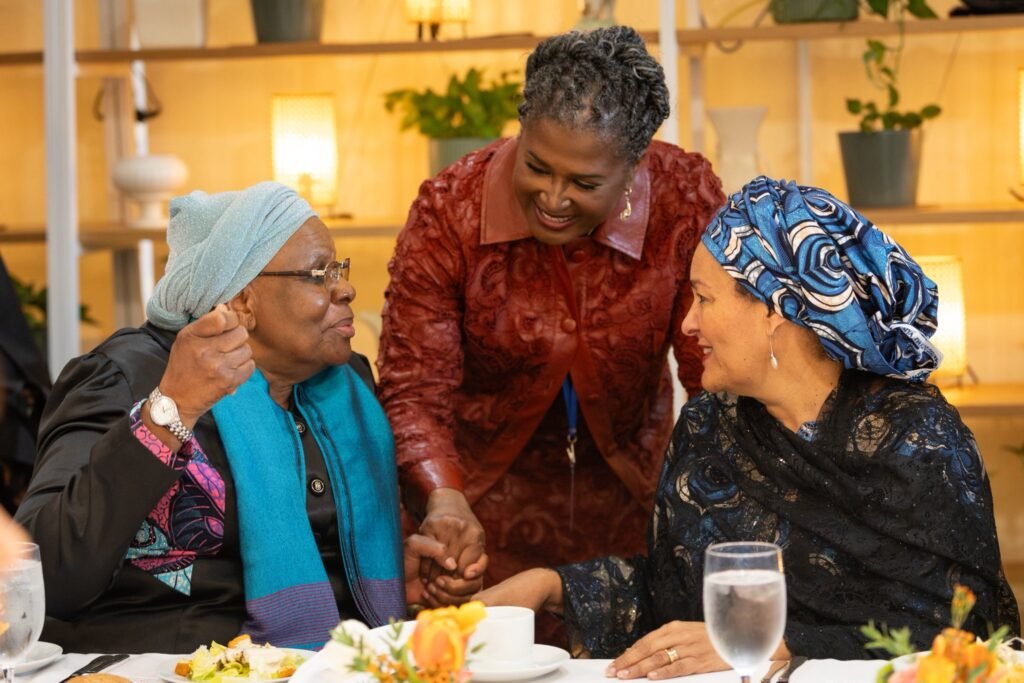
UN documentation confirms that Geingos participated in the SDG Moment on September 18, where she joined Mohammed for a discussion on collective action and accelerating progress toward the SDGs.
A central issue in the conversation was the need to ensure that young people have a meaningful role in decisions affecting their future.
Geingos argued that age should not be the sole measure of leadership capacity, but identified a gap between leadership structures and young people.
“Age does not determine whether someone is a good or a bad leader.”
She further called for established leaders to create space for the next generation, saying:
“We need to make space, give up some power and resources, and enable real, serious decision-making.”
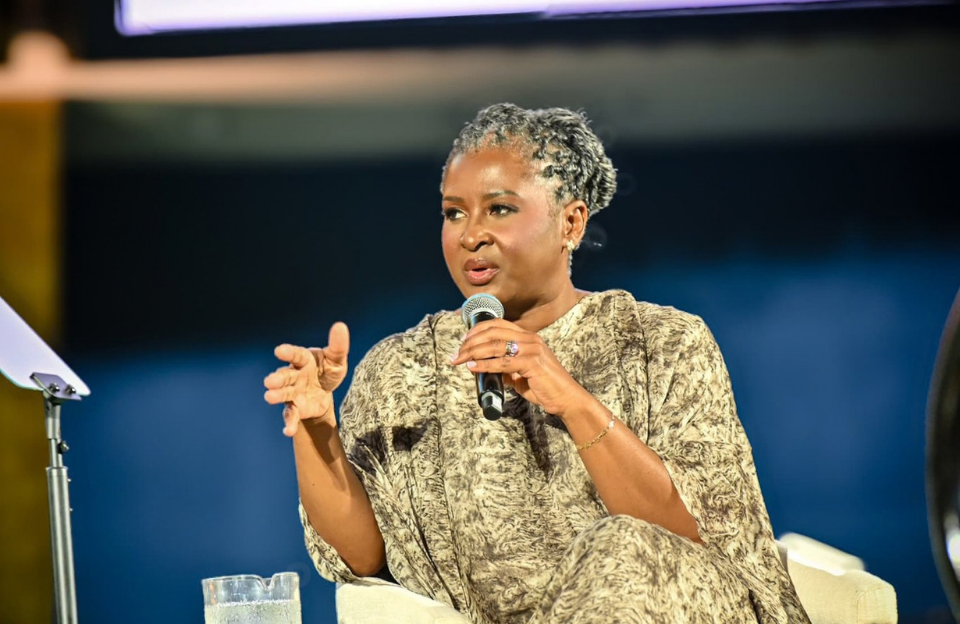
Her intervention placed youth participation, inclusion and intergenerational leadership at the centre of the SDG conversation.
She argued that young people may not always frame their concerns in the language of the SDGs, but they experience issues such as employment, healthcare, education, inequality and social and political challenges directly.
A Shared Continental Agenda
Although the four first-spouse engagements differ in emphasis, their activities during the UNGA period converge around several broad development themes.
For Sierra Leone, Fatima Maada Bio has focused strongly on girls’ rights, child protection, education, women’s health and ending child, early and forced marriage.
For Kenya, Rachel Ruto has brought school nutrition, children’s digital safety and education into global discussions.
For Zimbabwe, Auxillia Mnangagwa has used the New York platform to promote opportunities for women and young people, particularly through the creative economy, tourism and fashion.
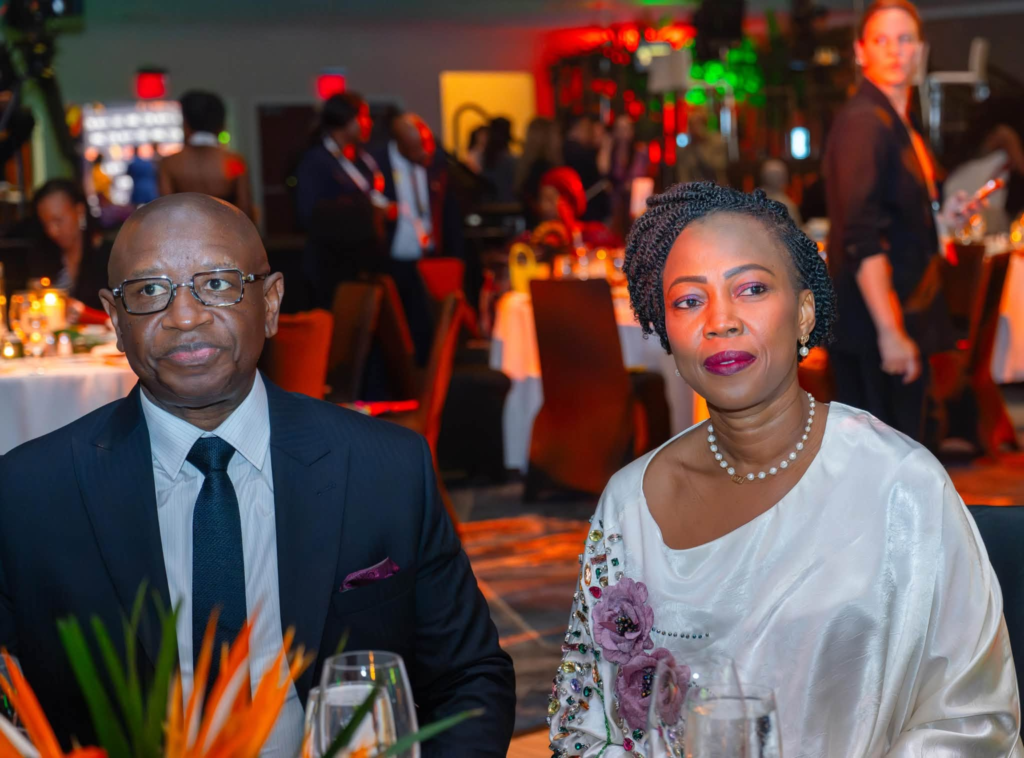
For Namibia, First Gentleman Epaphras Denga Ndaitwah has joined the continental first-spouse platform while advancing a complementary focus on boys, young men, education, sport and community development.
These engagements have taken place alongside the formal UNGA programme, illustrating how the annual gathering in New York extends beyond speeches by heads of state to include side events, partnerships, advocacy meetings, development forums and first-spouse initiatives. The AU notes that UNGA 81 side events have brought together governments, civil society, private-sector actors, women and youth representatives around issues including gender equality, human rights and peacebuilding.
For Africa’s first spouses, therefore, UNGA 81 has provided a platform not only to represent their countries but also to place women, girls, children, young people, nutrition, education, technology and inclusive development within wider international conversations. OAFLAD’s New York convening reinforces this role, bringing African first spouses together to take stock of progress, renew commitments and consider the organisation’s next chapter ahead of its 25th anniversary in 2027.

