
Liberia Ministry of Gender, Children and Social Protection hosted a high-level side event on Women, Peace and Security on the margins of the 81st UN General Assembly, themed “From Pioneers to Global Leaders: Liberia’s Journey in Women, Peace and Security.”
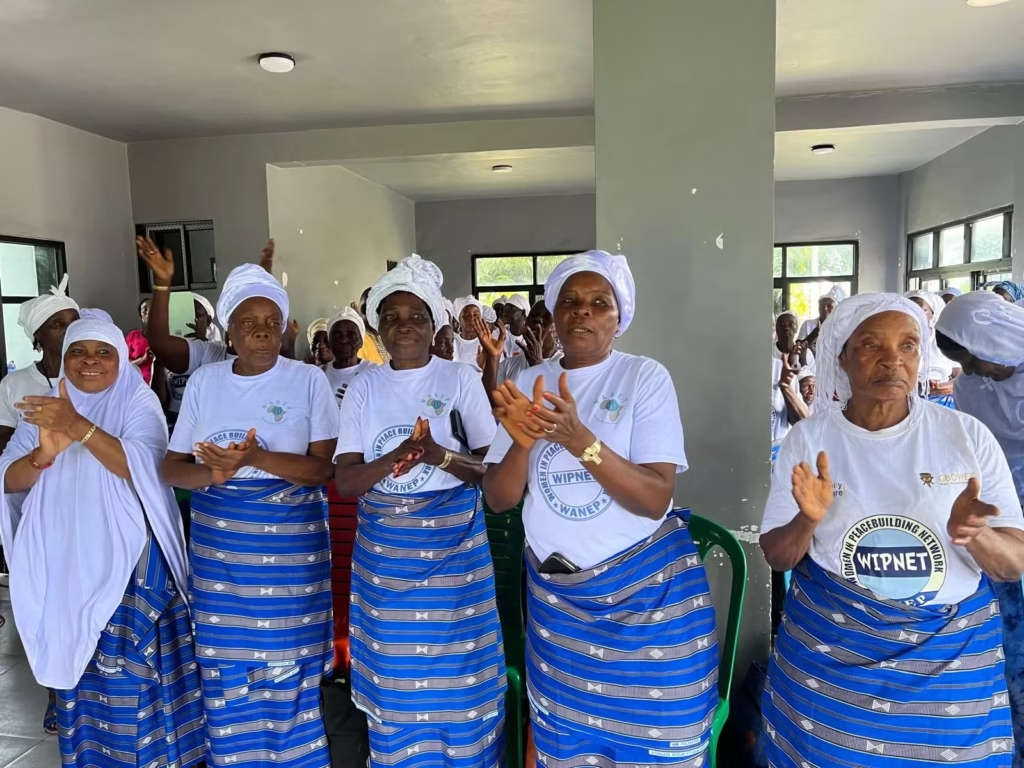
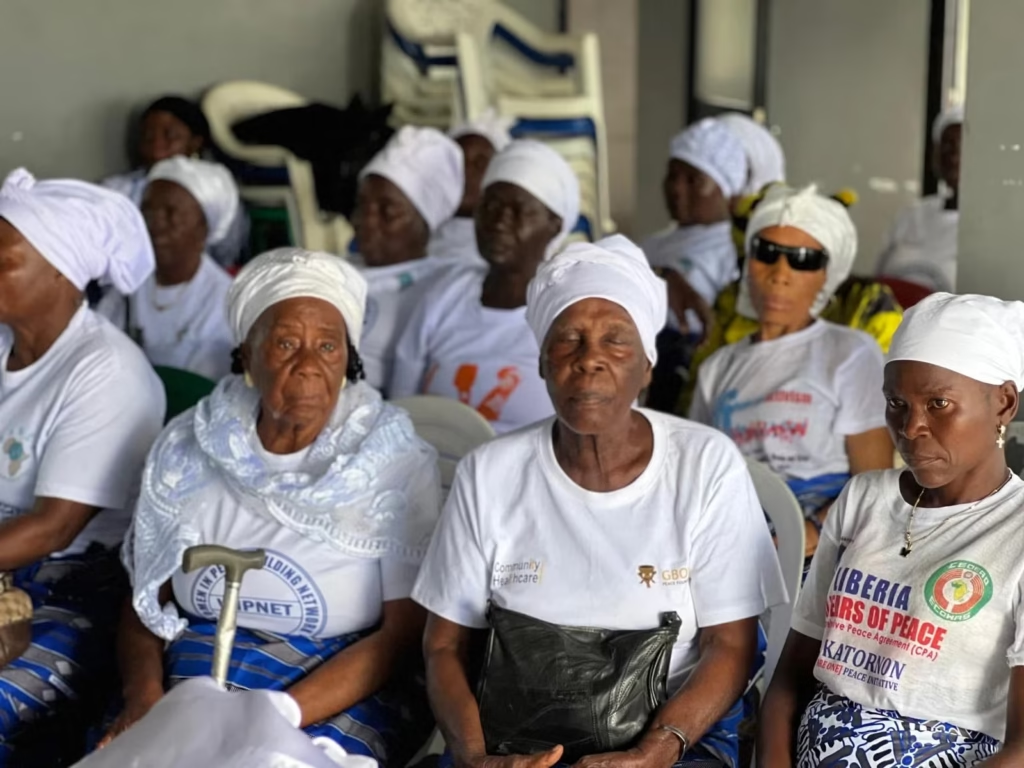
With backing from UN Women, members of the National Peace Hut Women and the Women in Peacebuilding Network (WIPNET) gathered to watch the livestream at the National Peace Hut at Fish Market in Monrovia and at the Ministry of Gender’s offices — a moment that underscored Liberia’s continued commitment to women’s leadership in peacebuilding and the wider Women, Peace and Security Agenda.
In his keynote address, President Joseph Nyuma Boakai, Sr. honoured the central role Liberian women played in securing peace and rebuilding the country, stressing that their leadership was not a supporting act but the driving force behind ending the conflict and laying peace’s foundations. “The world sometimes speaks of including women in peace as an act of generosity. Liberia knows better.
Women were not merely involved in our peace processes. Liberian women helped build peace,” he said.
He paid tribute to WIPNET, the Liberian Mass Action for Peace, market women, and Muslim and Christian women who crossed religious, ethnic and political lines to push for peace.
President Boakai also noted Liberia’s status as the first post-conflict nation in the world to adopt a National Action Plan on UN Security Council Resolution 1325, back in 2009. Building on that legacy, he used the event to launch Liberia’s Third National Action Plan on Women, Peace and Security (NAP III, 2026–2031), renewing the government’s pledge to strengthen women’s leadership, participation and protection across peacebuilding and governance.
Remarks also came from Minister of Gender, Children and Social Protection Gbeme Horace-Kollie, and Minister of Foreign Affairs Sara Beysolow Nyanti.
International solidarity was voiced by a lineup of officials, including Sweden’s UN Permanent Representative Charlotte Kugelberg, France’s Ambassador-at-Large for Human Rights Isabelle Rome, Austria’s Foreign Minister Beate Meinl-Reisinger, Nigeria’s Foreign Minister Bianca Odumegwu-Ojukwu, and Sierra Leone’s Foreign Minister Mohamed Rahman Swaray.
A dedicated session paid tribute to Liberia’s women peacebuilding pioneers, featuring 2011 Nobel Peace Laureate Leymah Gbowee, Cerue Liyean McGill of the Peace Hut, Ophelia Eliza Hoff of the Mano River Women Peace Network (MARWOPNET), and Cllr. Yvette Chesson-Gibson of the Angie Brooks International Centre — a reminder of how women-led movements and community institutions have long driven conflict prevention, reconciliation and social cohesion.
A high-level panel then turned to financing and sustaining the WPS agenda, bringing together Tonni Ann Brodber of the Women’s Peace and Humanitarian Fund, Liberia’s Minister of Finance and Development Planning Augustine Kpehe Ngafuan, Richard Howard of the Peacebuilding and Peace Support office, African Union Envoy on WPS Amb. Liberata Mulamula, and UN Women Deputy Executive Director ASG Nyaradzayi Gumbonzvanda.
Their discussion centred on sustainable financing, institutional accountability, partnerships and continued investment in women’s leadership and locally driven peacebuilding.
READ HERE: UNESCO, SNAEIA UNVEIL NEW EMPOWER-HER INITIATIVE FOR AFRICAN WOMEN LEADERS
Liberia’s NAP III (2026–2031) builds on lessons from earlier action plans, with a sharper focus on localisation, stronger accountability, expanded women’s participation and leadership, greater youth involvement, and sustainable financing for implementation.
Liberia’s Permanent Representative to the United Nations, Lewis Garseedah Brown II, delivered the closing remarks.
By bringing together global leaders and grassroots peacebuilders, the event reaffirmed Liberia’s commitment to keeping women’s experiences, leadership and priorities at the centre of peace and security efforts — nationally, regionally and globally.

