
UNESCO is advancing rights-based AI in African judiciaries, promoting human oversight, gender equality, women’s rights and accountable digital justice.
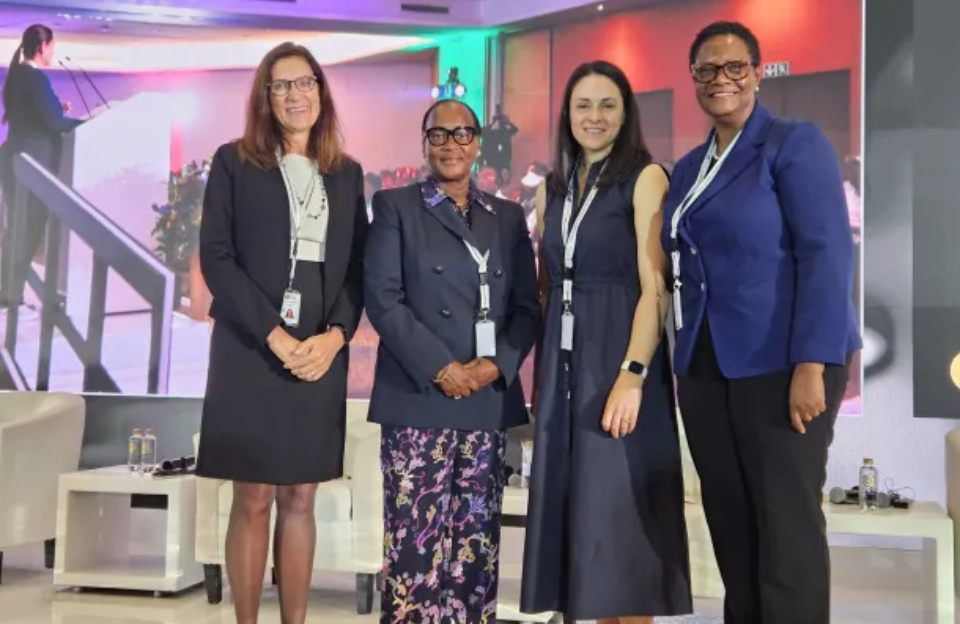
The Second High-Level Meeting of Women Judicial Leaders of Africa, hosted by the Office of Chief Justice of South Africa was held from 20-24 April 2026 under the theme “The Maputo Protocol @20: Consolidating the Jurisprudence of Equality for the Next Generation,” brought together more than 300 Chief Justices, Presidents of Constitutional Courts and senior judicial leaders to address emerging challenges facing justice systems across the continent.
Speaking during the session, Eunice Smith, Head of the UNESCO Office in Namibia and UNESCO Representative, stressed the responsibility of judicial leaders to ensure AI remains accountable to human rights.
Through its AI and the Rule of Law Program, UNESCO highlighted both the opportunities AI offers to improve access to justice and the risks it poses when deployed without human rights safeguards. In addition, through its Social Media 4 Peace (SM4P) Project, supported by the European Union, UNESCO further contributed to the event by disseminating the Judicial Handbook on Countering Harmful Online Content.
ALSO READ: NEW: STERLING BANK, NGCP TO DRIVE WOMEN’S ECONOMIC INCLUSION
The Handbook serves as a strategic resource for judicial leaders, offering a human rights-based framework to strengthen judicial responses to hate speech, disinformation, and other harmful online content, while safeguarding freedom of expression and reinforcing the rule of law in the digital age.
UNESCO also showcased practical tools to help courts navigate this new frontier, course includes a dedicated module on AI and Women’s Rights, equipping judges with the knowledge to identify algorithmic bias, assess AI-generated evidence and apply human rights principles in judicial decision-making.
Through its Global Judges Initiative, UNESCO has already trained more than 38,000 judicial operators in over 160 countries, strengthening judicial capacity to govern AI responsibly. It also calls for AI to advance not undermine the rights, safety and equality of women.
Beyond artificial intelligence, the Declaration reaffirmed a collective commitment to strengthening gender-responsive jurisprudence by advancing women’s leadership in the judiciary, improving protection against violence, promoting women’s economic empowerment and also bringing together judicial leaders, international experts and development partners, UNESCO reaffirmed its commitment to supporting African judiciaries in building AI-ready justice systems that uphold human dignity, protect women’s rights and strengthen the rule of law.

