

Aishah N. Ahmad, Global Finance & Governance Leader and Board Member of the Financial Alliance for Women, has spotlighted the growing impact of the WE Finance Code as a transformative initiative for advancing women’s economic empowerment through financial systems.
Moderating a high-level roundtable convened by the We-Fi Secretariat under Japan’s chairship of the We-Fi Governing Committee during the IMF/World Bank Spring Meetings, Ahmad emphasised the Code’s evolution from an early-stage concept into a systemic, country-led movement.
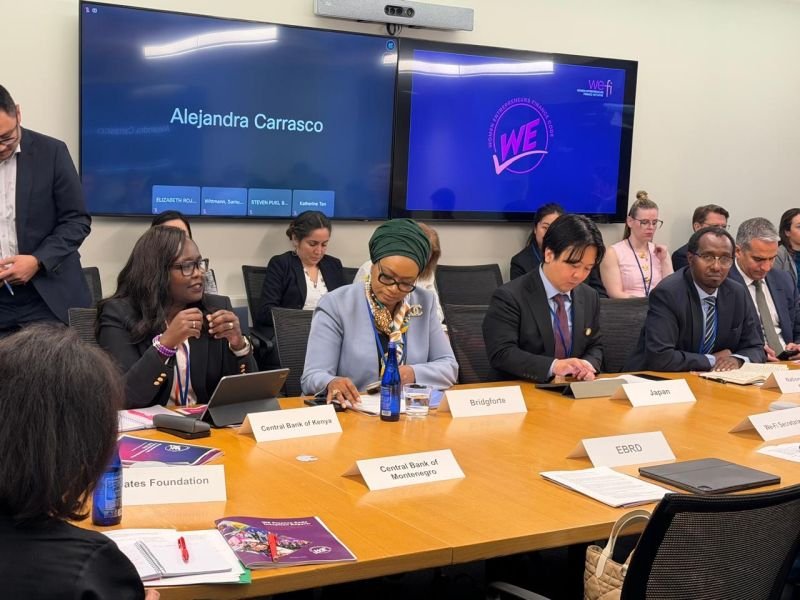
The roundtable brought together central bank governors, multilateral development institutions, donors, and implementing partners, including senior representatives from the World Bank Group, European Bank for Reconstruction and Development (EBRD), and IDB Invest.
Strong implementation updates were shared from Montenegro, Kenya, and Rwanda, showcasing diverse national approaches to embedding the Code within financial system reforms.
Reflecting on the session, Ahmad noted three critical lessons for initiatives seeking to scale from concept to movement:
“First, the WE Finance Code has clearly moved beyond the pilot phase. What started as an ambition covering eight to ten countries now spans 33, with a credible pathway toward 90. This reflects a new model of multilateral collaboration — country-led, data-anchored, outcome-driven, and sustained through strong coalitions rather than single institutions,” she said.
“Second, leadership matters immensely. Leading countries are embedding the Code differently — some within national financial inclusion strategies, others in presidential-level economic reform agendas. The common thread is that durable progress occurs when the initiative is aligned with existing national priorities rather than treated as a standalone project.”
“Third, the real test now lies in action. While sex-disaggregated data is essential, the harder work is translating that data into tangible products, pricing, policies, and capital allocation. This next phase will determine the true impact of the Code,” Ahmad added.
Ahmad commended the We-Fi Secretariat, led by Wendy Teleki, for its persistent coalition-building and strategic stewardship, describing the WE Finance Code as “one of the more serious efforts I have seen to reshape what financial systems are designed to serve.”

