
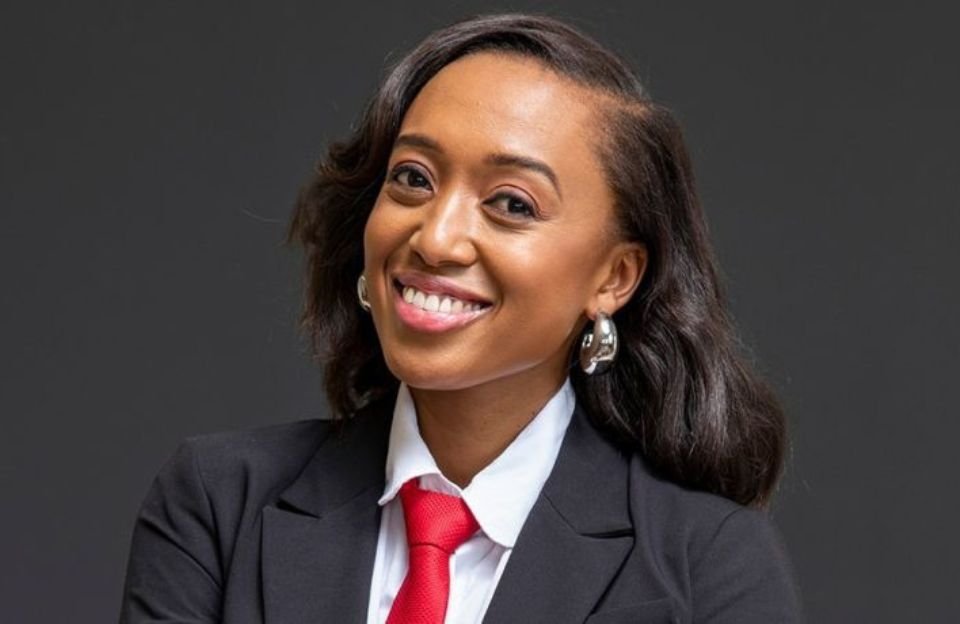
Ballott: Namibia’s Gender Equality is a Mandate for Action
As Namibia cements its status as Africa’s most gender-equal nation, Standard Bank Namibia’s Head of People and Culture, Retuura Ballott, says the country’s progress is more than a milestone — it is a mandate for organisations to act.
“Investing in women is not an act of goodwill. It is a strategic decision,” said Ballott, who oversees people strategy at one of Namibia’s leading financial institutions. “When women have equitable access to opportunities, coaching and leadership visibility, the organisation gains significantly in capability and performance.”
Her remarks come as fresh data reinforces Namibia’s gender equality credentials. The World Economic Forum’s 2025 Global Gender Gap Report ranks Namibia as the most gender-equal country on the continent and the only African nation in the global top ten, having closed 81.1 per cent of its gender gap.
Separately, the African Development Bank’s 2025 Gender Brief places Namibia among the top three African countries with the least gender disparity, driven by strong education outcomes for girls and growing female representation in decision-making roles.
At Standard Bank Namibia, those national gains are reflected in the bank’s own workforce. Of its more than 1,300 employees, 65 per cent are women. More than 800 women are represented across management, senior leadership, and executive levels — forming the majority of the bank’s leadership pipeline.
Ballott said the bank’s 2026 targets commit it to achieving at least 50 per cent female representation across all divisions. That goal, she emphasised, is grounded in evidence rather than compliance.
“Gender-balanced leadership correlates strongly with organisational resilience, improved performance and enhanced decision-making quality,” she said.
ALSO READ: CHIAMAKA NNAKE BECOMES ANAMBRA’S FIRST FEMALE SSG
Central to delivering on those targets is what Ballott describes as the bank’s Succession Acceleration Plan — a deliberate programme to map high-potential women into critical roles and ensure depth and continuity across the leadership pipeline. The plan is complemented by expanded coaching and mentorship programmes, with particular focus on the transitions from junior to middle management and from middle to senior leadership.
“These are often the inflection points where women face the most pronounced barriers,” Ballott said. “Our interventions are aimed at closing those gaps through structured support that builds capability, confidence and mobility.”
She acknowledged, however, that structural challenges persist even amid Namibia’s progress. Data from the UN Women Data Hub points to ongoing gaps in labour market participation, unpaid care work, and women’s access to economic assets. Ballott said these realities require organisations to look beyond representation and actively design policies that reduce bias, expand flexibility, and create equitable advancement pathways.
Namibia’s political landscape has added further symbolism to this moment. For the first time in the country’s history, both the President and Vice President are women — a development Ballott said carries weight well beyond the political sphere.
“Such visibility strengthens the leadership aspirations of young women and sends a powerful message to institutions across the country,” she said.
The bank’s broader inclusion work has also evolved, Ballott noted, from a focus on empowering women to building environments where both men and women engage meaningfully on equity — an approach she said requires accountable leadership and safe platforms for honest dialogue.
This year’s Women’s Month theme, Give to Gain, resonates closely with that philosophy.
“By giving our people the support, resources and pathways they need to succeed, we gain an organisation equipped to drive Namibia’s growth with strength, integrity and ambition,” Ballott said.

