

The Ghana Revenue Authority (GRA) has restated its commitment to supporting women-led businesses, particularly those operating in the informal sector, during the 4th Annual Conference of the Society of Women in Taxation (SWIT).
Commissioner-General Anthony Kwasi Sarpong and Commissioner for Domestic Tax Revenue Division (DTRD) Dr. Martin Kobil Yamborigya joined members of SWIT, the female wing of the Chartered Institute of Taxation, Ghana (CITG), and other stakeholders for the discussions. The conference was held under the theme “Tax Reforms, Informality and Gender: Implications for Women-Led Businesses in the Informal Sector.”
The gathering brought together tax administrators, legal practitioners, government officials and financial professionals to examine how Ghana’s tax system can better respond to the realities faced by women in the informal economy.
Mr. Sarpong highlighted the critical role women play in trade, entrepreneurship and domestic revenue mobilisation. He stressed that the GRA remains committed to supporting women entrepreneurs through tax and administrative reforms.
READ ALSO: AISHAH AHMAD ADVOCATES NEW FINANCIAL SYSTEMS THAT DELIVER FOR WOMEN
He noted that women-led enterprises account for about 40 percent of Africa’s self-employed population and contribute approximately 15 percent of the continent’s total GDP.
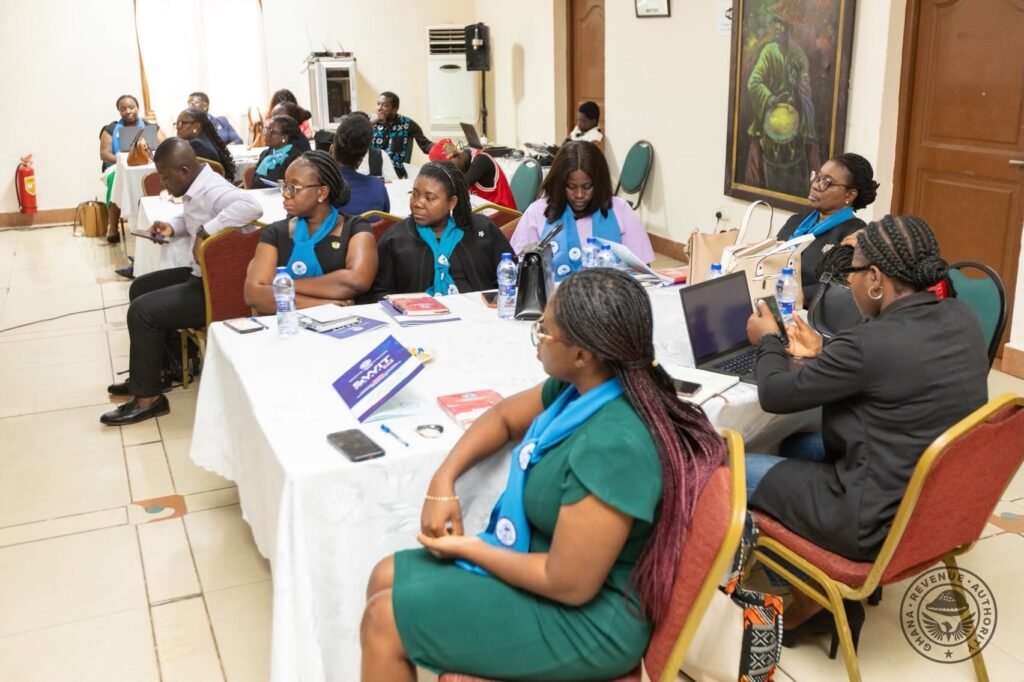
Mrs. Ernestina Christina Appiah, President of the Chartered Institute of Taxation Ghana, emphasised that gender-responsive tax policy must be paired with financial education and responsible financial management. She commended SWIT for providing a platform that promotes tax literacy, gender inclusion and ethical tax practice, underscoring that financial literacy is essential for the long-term survival and growth of informal businesses.
Notable attendees included Hon. Nana Oye Bampoe Addo, Esq., Deputy Chief of Staff; Madam Esi Duma Sam, Regional Chairperson of SWIT West Africa; representatives from the Association of Women Accountants Ghana (AWAG); the Women’s Forum of the Ghana Bar Association; the International Federation of Women Lawyers; and SWIT West Africa.
Participants agreed that tax reforms should extend beyond revenue collection to address the practical conditions under which informal businesses operate. They called for stronger institutional partnerships between tax authorities, market associations and other stakeholder groups, with greater focus on education, transparency and incentives to promote voluntary compliance rather than relying primarily on enforcement.

