
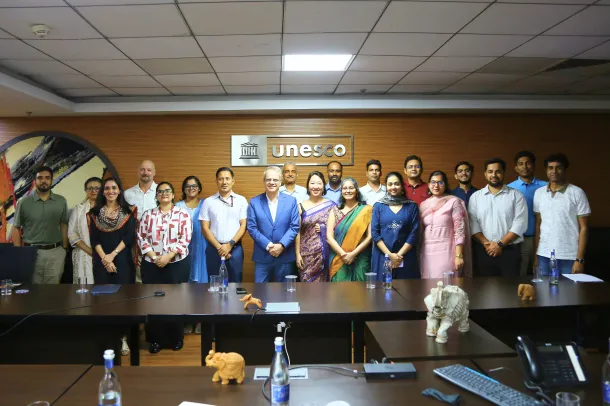
UNESCO convened a roundtable on advancing safe and inclusive play for adolescent girls in India, bringing together government officials, international sport bodies, civil society organisations and corporate foundations to explore the challenges girls face in sport.
Marking an introduction to Kickstart Her Future, a UNESCO-Nike initiative focused on safer, more inclusive sport for adolescent girls, the roundtable explored the challenges girls face in sport.
The roundtable marked the introduction of Kickstart Her Future, an initiative developed by UNESCO in partnership with Nike to build a safer, more inclusive sports ecosystem for adolescent girls aged 11–17. The two-year project will be implemented across Delhi NCR — a major metropolitan region encompassing the National Capital Territory of Delhi and its surrounding urban districts.
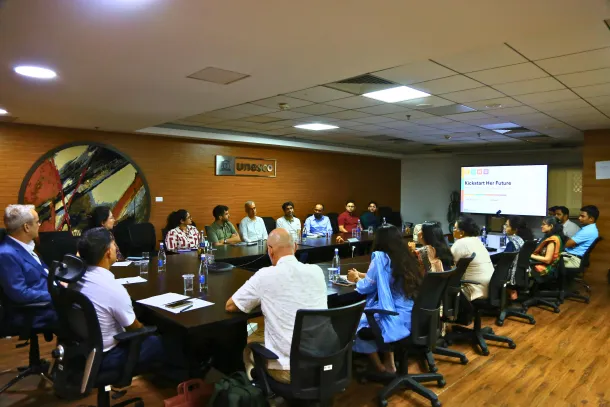
The discussions drew on the findings of the UNESCO–UN Women publication, “Tackling Violence against Women and Girls in Sport: A Handbook for Policy Makers and Sports Practitioners,” which points to a shortage of trained coaches, girls’ body confidence and related barriers, and inappropriate behaviour by male coaches as key factors behind girls dropping out of sport.
Grassroots sports organizations need to come together far more regularly, to exchange ideas and build capacity collectively. Too much of our political, media and financial attention still goes to medals and elite performance, when sport is one of the most cost-effective tools we have for personal, social and health benefit.
Girls, in particular, continue to navigate spaces that were built by men, for men and getting the right people, with the right competencies, into coaching matters just as much as the training we give them.
READ ALSO: GSMA,MTN GHANA DRIVE MOBILE GROWTH FOR WOMEN MICRO-ENTREPRENEURS
Khelo India funding from the Central Government has grown roughly eight-fold in recent years, with additional spending at the state level and a growing focus on developing and engaging female coaches through initiatives like the ASMITA leagues. With that scale of investment comes a responsibility to make sure every girl who wants to play has a safe place to do it — that is where partnerships like this one matter.
Inspired by the Body Confident Sport Program originally developed in partnership between Nike, Dove, the Tucker Center for Research on Girls & Women in Sport and the Centre for Appearance Research, this initiative aims to build evidence on girls’ participation in sport, create Safe Body Confident Sport (SBCS) resources in Hindi, and train coaches to safeguard girls against gender-based violence in and through sport.
Crucially, it seeks to integrate SBCS principles into formal certification frameworks, including the coaching pathways of the Sports Authority of India (SAI).
Participants underscored that coach training must be continuous rather than a one-off endeavour, combining mentorship, rigorous assessment of Master Trainers, and a core curriculum focused on safeguarding, gender-sensitive communication, and reporting mechanisms. They stressed that keeping girls in sport requires a coordinated effort among parents, teachers, school leaders, and local officials — not just coaches.
Haryana’s sports nurseries were cited as a proven model: a community-based, women-led initiative that remunerates coaches and provides stipends to young athletes, with several nurseries linked to a residential sports excellence centre in Panipat. Participants also called for identifying the point at which girls typically drop out of school sport, to allow earlier intervention.
The roundtable closed on a clear note of shared commitment. Government representatives, international sports bodies, and civil society partners aligned not only on the scale of the challenge facing girls in sport, but on concrete starting points for action — providing Kickstart Her Future with a strong foundation as it enters its initial phase.

