
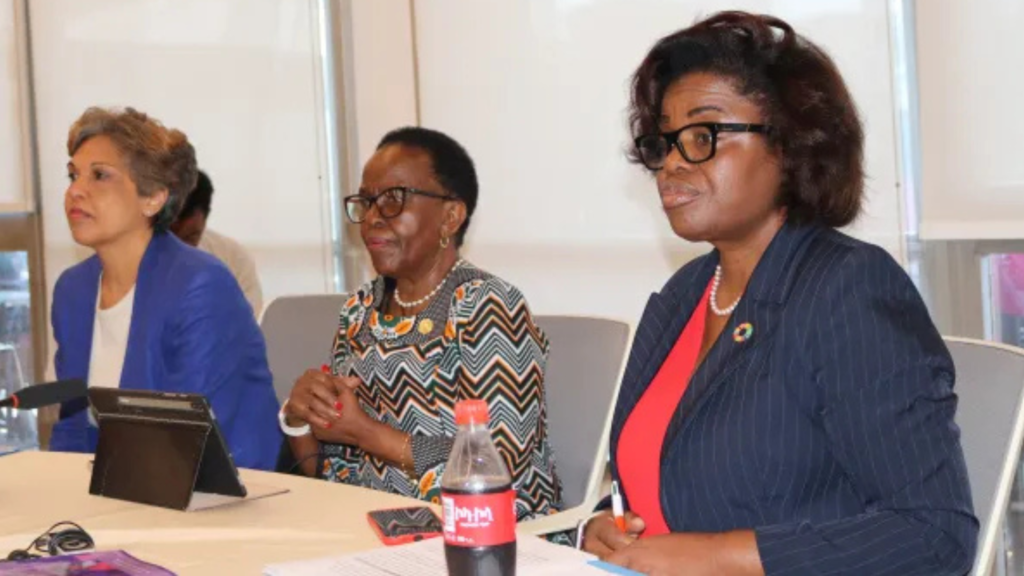
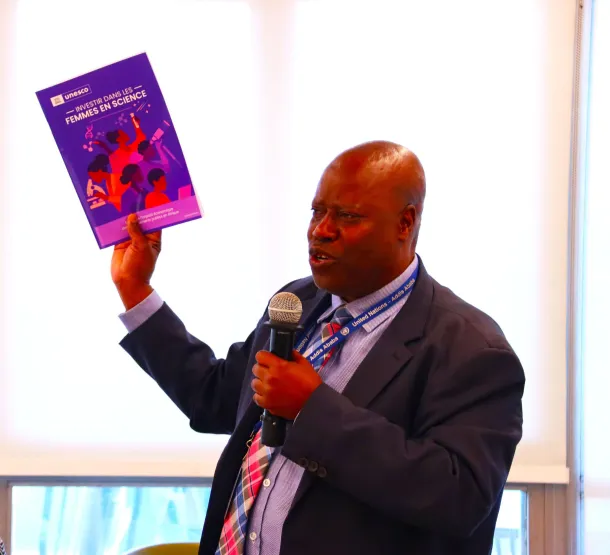
UNESCO has launched a landmark report titled “Investing in Women in Science: The Economic Impact of Public Funding in Africa,” positioning gender equality in science as a critical driver of Africa’s sustainable development and economic transformation.
The report, unveiled on April 27, 2026, marks a major shift from advocacy-driven conversations to evidence-based policy action, bringing together African governments, regional institutions, and development partners around the urgent need to strengthen women’s participation in science, technology, and innovation (STI).
Opening the event, Dr. Rita Bissoonauth stressed the importance of moving beyond symbolic conversations toward measurable reforms in science and innovation policy.
According to her, “no scientific progress can be truly sovereign if more than half of our population remains underrepresented in the production of knowledge.”
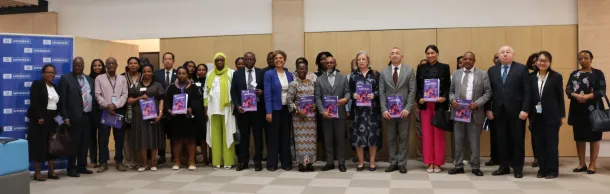
The event convened key institutional leaders, including Liberata Mulamula, Doris Mpoumou, and Helen Nigussie, all reinforcing the message that gender parity in science is no longer simply a social inclusion issue but a strategic economic necessity.
A major highlight of the report was the presentation of an original econometric model developed by Prof. Adama Sow Badji and her research team, quantifying the economic impact of investing in women in science.
The findings revealed that a 10 per cent increase in targeted higher education investment for women could generate a 12.8 per cent rise in national GDP and a 14 per cent expansion in the tertiary sector.
Conversely, the report estimates that Sub-Saharan Africa loses approximately $105 billion annually due to persistent structural barriers limiting women’s participation in science and innovation.
According to UNESCO, these barriers include the absence of gender-disaggregated data in national planning systems, underrepresentation of women in scientific leadership, and widespread workplace discrimination, including sexual harassment that continues to affect career progression and scientific contribution globally.
The report concluded with a strong call for reforms built around three key pillars: strengthening governmental accountability through gender-responsive budgeting and STI performance metrics; advancing institutional reforms that support women’s leadership, intellectual property ownership, and academic freedom; and encouraging private sector co-investment to bridge funding gaps for women-led innovation and research.
ALSO READ: OLAJUMOKE AGBETANMIJE APPOINTED NIGERIA SUSTAINABILITY OFFICER AT DELOITTE
Through its Women in Science Initiative, UNESCO said it aims to create a continent-wide coordination platform capable of transforming fragmented national efforts into a unified, measurable, and digitally monitored movement aligned with Agenda 2063, STISA 2034, and the UN 2030 Agenda.
UNESCO noted that Africa’s long-term competitiveness and development ambitions will depend on its ability to fully harness its intellectual capital, adding that investing in women in science is not only the most equitable path forward but also the most economically strategic.

